I own five coffee tables. Not in one room, to be clear, I’m not running a furniture showroom out of a one bedroom in Somerville, but five, spread across a life that has involved three moves, one breakup that came with a table settlement more contentious than it had any right to be, and a period in my late twenties where I apparently believed every surface in my apartment needed something to put a coffee cup on. Two are in my actual living room right now. One is in storage at my parents’ place in Worcester, doing nothing, costing me nothing except the low grade guilt of owning a thing I refuse to get rid of. One lives in my home office as a footrest, which is its third career after failing as a coffee table and briefly as a plant stand. And one I gave to my sister, who still texts me photos of it like it’s a shared custody arrangement.
So when my friend Dana texted me out of nowhere last month, “can you have two coffee tables in a living room or is that insane,” I felt uniquely qualified to answer, and also mildly attacked, because I had clearly already answered that question with my own life several times over without ever consulting a rule book.
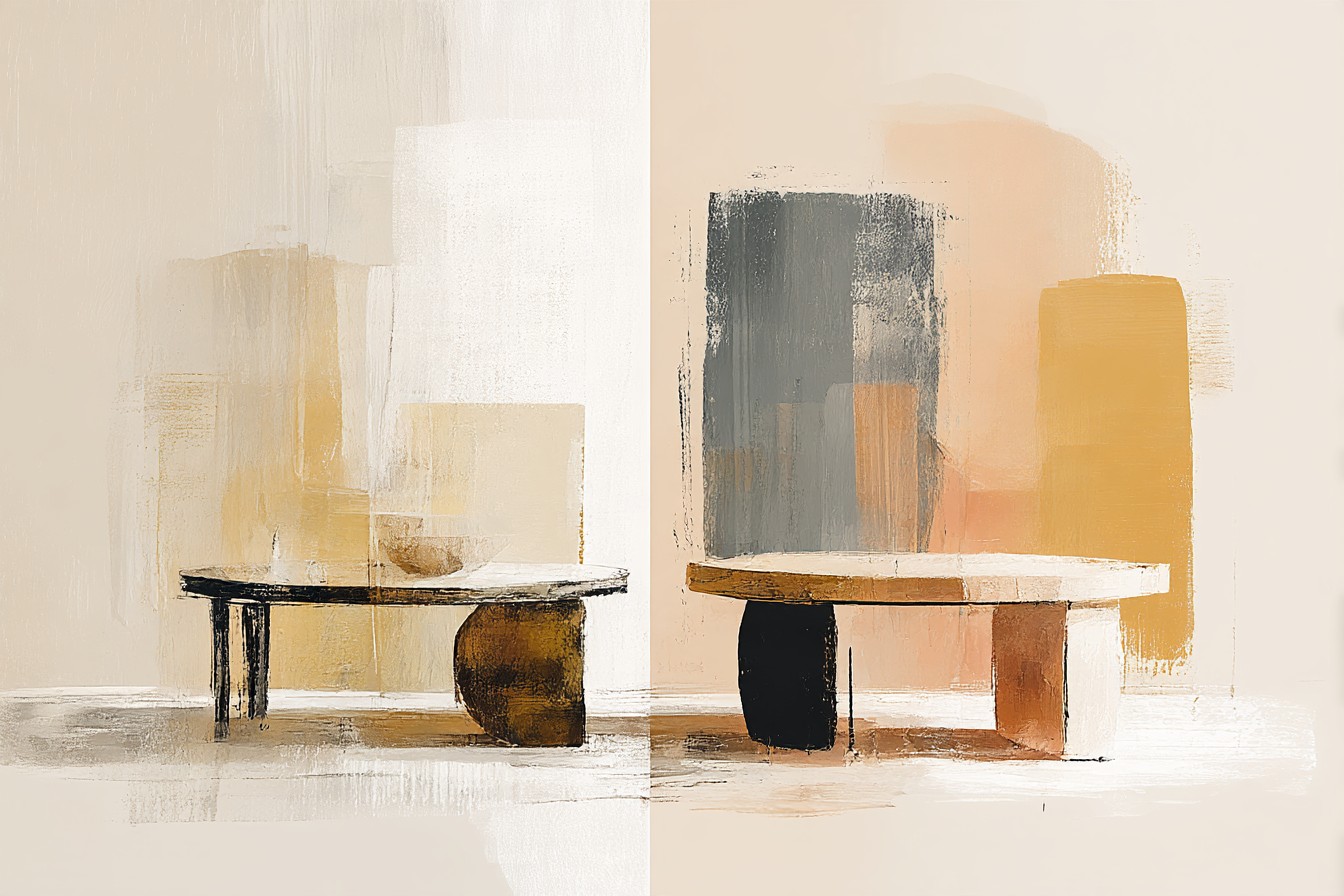
Dana had just moved into a place with a longer, narrower living room than she was used to, the kind of shape where one coffee table sits there looking lonely and slightly apologetic in the middle of all that floor, and she’d seen a photo somewhere of two tables doing the job instead and wanted to know if that was a real thing people did on purpose or a mistake she was about to make with actual money.
It’s a real thing. It’s also not one thing, that’s the part nobody tells you. Two coffee tables isn’t a single decision, it’s at least four different decisions wearing the same outfit, and the one you pick changes how people actually move through your room, where they sit, where they put their drink down, whether your living room reads like it was thought through or like you couldn’t commit to a floor plan. I’ve lived with more of these combinations than any reasonable person needs to, and I have opinions about every single one, so let’s go through them properly.
[Two Coffee Tables]
The Matched Pair
Two identical tables, set side by side or at either end of a sectional, is the version people picture first because it’s the safest looking answer on paper. Symmetry reads as intentional even when you’ve done zero actual thinking, which is exactly why I fell for it in my first proper apartment, two square oak tables from a shop that’s since gone under, pushed together to make one long surface in front of a sofa that was too big for the room anyway.
Here’s what nobody mentions about the matched pair. It photographs beautifully and it lives terribly if your room doesn’t have the width to spare. Mine didn’t. Every time someone walked from the kitchen to the window they had to do this little sideways shuffle around the join of the two tables, and more than once a full glass of wine did not survive that shuffle. My downstairs neighbor at the time, the one I still occasionally rant to about unrelated furniture crimes, once described walking through my living room as “an obstacle course with snacks on it,” which is the kind of feedback you remember for a decade.
Where the matched pair actually earns its keep is in a genuinely wide room, or in front of a long sectional where one table alone would look stranded at one end of it, leaving the other end of the sofa without anywhere to put a mug. Two identical low tables either side of a big sectional gives everyone their own landing spot and doesn’t ask you to make a design decision beyond “buy two of the same thing,” which, credit where it’s due, is the easiest brief in furniture.
[Matched Pair Coffee Tables]
Two Different Tables
This is the version I actually run in my current living room, and it’s the one that gets misunderstood the most. Two different coffee tables isn’t mismatched by accident, it’s mismatched on purpose, which is a completely different exercise and requires you to actually know what you’re doing rather than just grabbing whatever’s in stock.
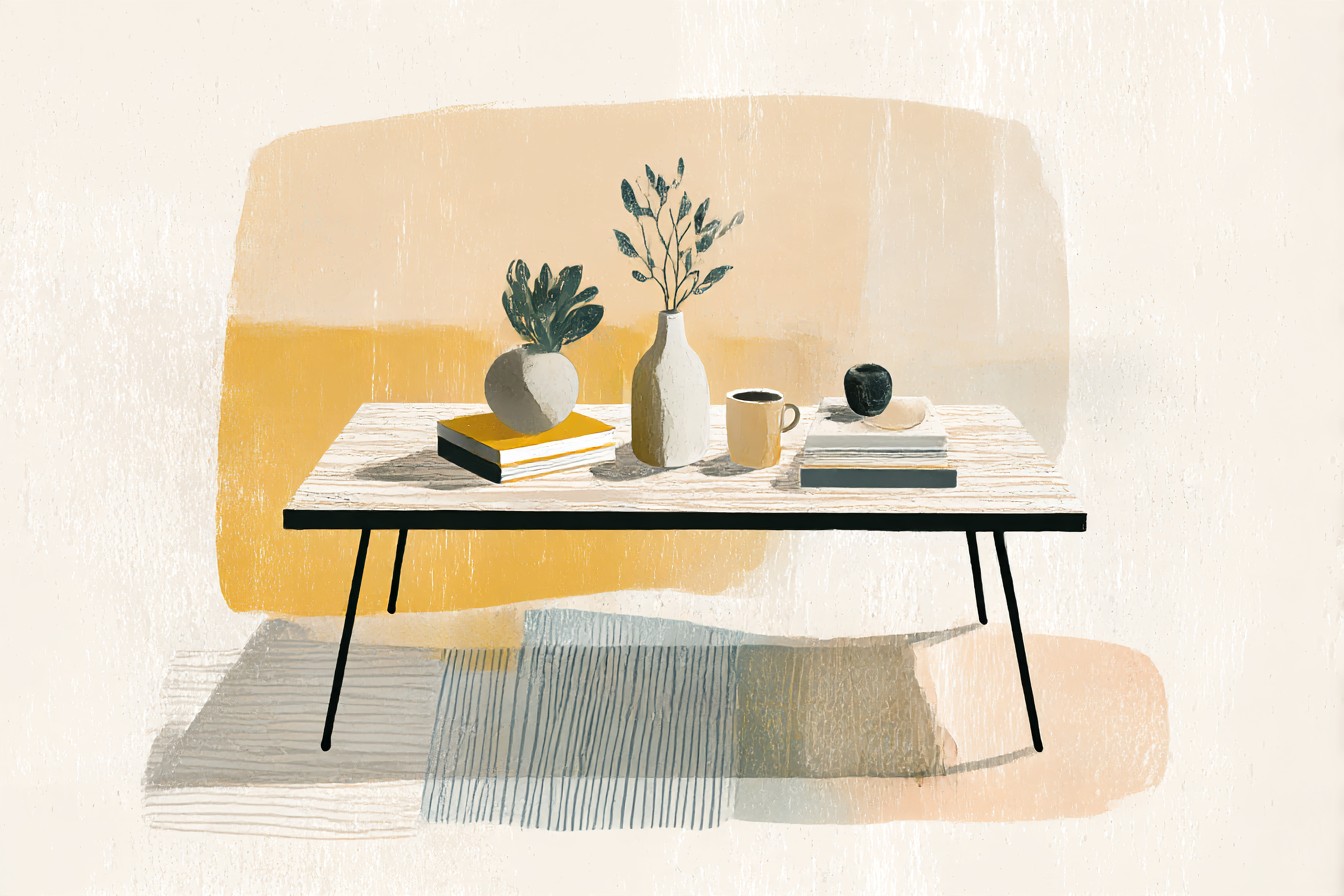
Mine is a round marble topped table I bought secondhand for eighty dollars off someone moving out of a condo in Cambridge, paired with a low wooden bench style table my dad built badly enough that I love it more than anything I’ve bought retail. They don’t match in material, height, or shape. What they share is a color story, warm wood tones and pale stone, so the eye reads them as a decision rather than a compromise.
The functional upside of two different tables is that they can do different jobs. My marble one is where drinks live, because it doesn’t stain and I’ve tested that claim with a truly unfortunate amount of red wine. The wooden bench one holds books, the remote, and whatever my nephew has abandoned mid visit, because it can take a beating in a way I was never going to trust the marble with. That division of labor is the whole argument for choosing two different tables over a pair, you’re not doubling a job, you’re splitting one job into two, and your room gets to feel a little more like it evolved than like it was ordered off one page of a catalog.
[Different Coffee Tables]
Big and Small, One Anchor and One Satellite
There’s a version of this that isn’t two tables of similar size at all, it’s one proper coffee table doing the main work and a smaller second one tucked in as a satellite, and I think it’s the option most people don’t consider because it doesn’t look like “two coffee tables” in their head, it looks like one table and one extra.
You Might Also Like

I ran this setup for two years with a large rectangular table in front of my sofa and a small round side table wedged between an armchair and the wall, close enough to reach but out of the main walking path entirely. The satellite table cost me eleven dollars at an estate sale, had a wobble I never fixed, and did more genuinely useful work than either of the more expensive tables I’ve owned, because it meant the person in the armchair, always my mother when she visited, always with a mug of tea she needed to put down somewhere, wasn’t leaning across an entire room to reach the main table.
This is the setup I’d point Dana toward for her long narrow room, honestly, because it solves the exact problem a matched pair creates. The big table anchors the seating and does the visual heavy lifting, the small one slots into a gap that would otherwise be dead space, and neither one competes for the walking path down the middle of the room. Nobody’s doing the wine glass shuffle. It just quietly works, which I realize is the least exciting sentence in this entire piece, but sometimes the boring answer is the correct one.
[Big and Small Coffee Tables]
Ottoman Instead of Table Number Two
I want to talk about the version that technically isn’t two coffee tables at all, because it’s the one I’d actually recommend to most people who ask me this, and it’s the one nobody counts when they’re doing the “how many tables do you own” math, which is convenient for me given the number I opened this piece with.
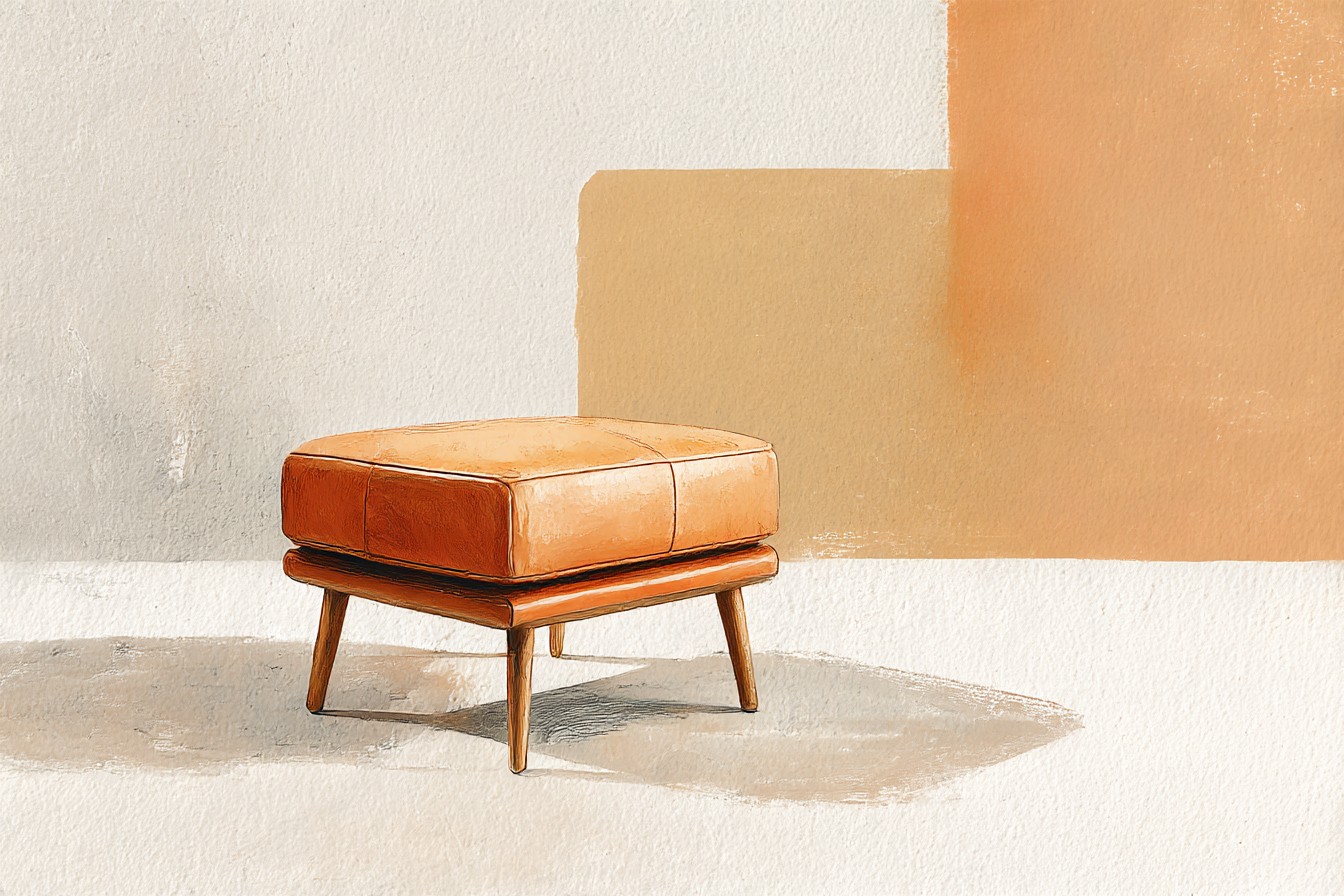
Swap the second table for a large upholstered ottoman and you get almost everything two tables gives you, a surface, a place for feet, a second landing zone, without the hard edges multiplying in a room that already has a coffee table’s worth of them. I did this after my niece went through a phase of walking directly into the corner of a glass table with the kind of consistency that suggested it wasn’t an accident anymore, it was a bit. The ottoman went in as the second surface, a tray on top for drinks when there were guests, and the corners of my living room stopped being a genuine hazard to small children and, honestly, to me at 2am looking for a glass of water.
The trade off is that an ottoman reads softer and less like furniture with a job title, so if you want your room to look like it has two coffee tables in the photograph sense, this isn’t it. But if the actual question is whether you can have two surfaces to put things on without doubling the amount of hard right angles a toddler or a half asleep adult can walk into, the ottoman answers that better than a second table ever will.
[Ottoman Coffee Table Alternative]
The Nesting Table Compromise
And then there’s the option for people like my sister, who wants the flexibility of two tables but doesn’t actually have the floor space to commit to two permanent footprints, which is most rental apartments in this city if we’re honest about square footage.
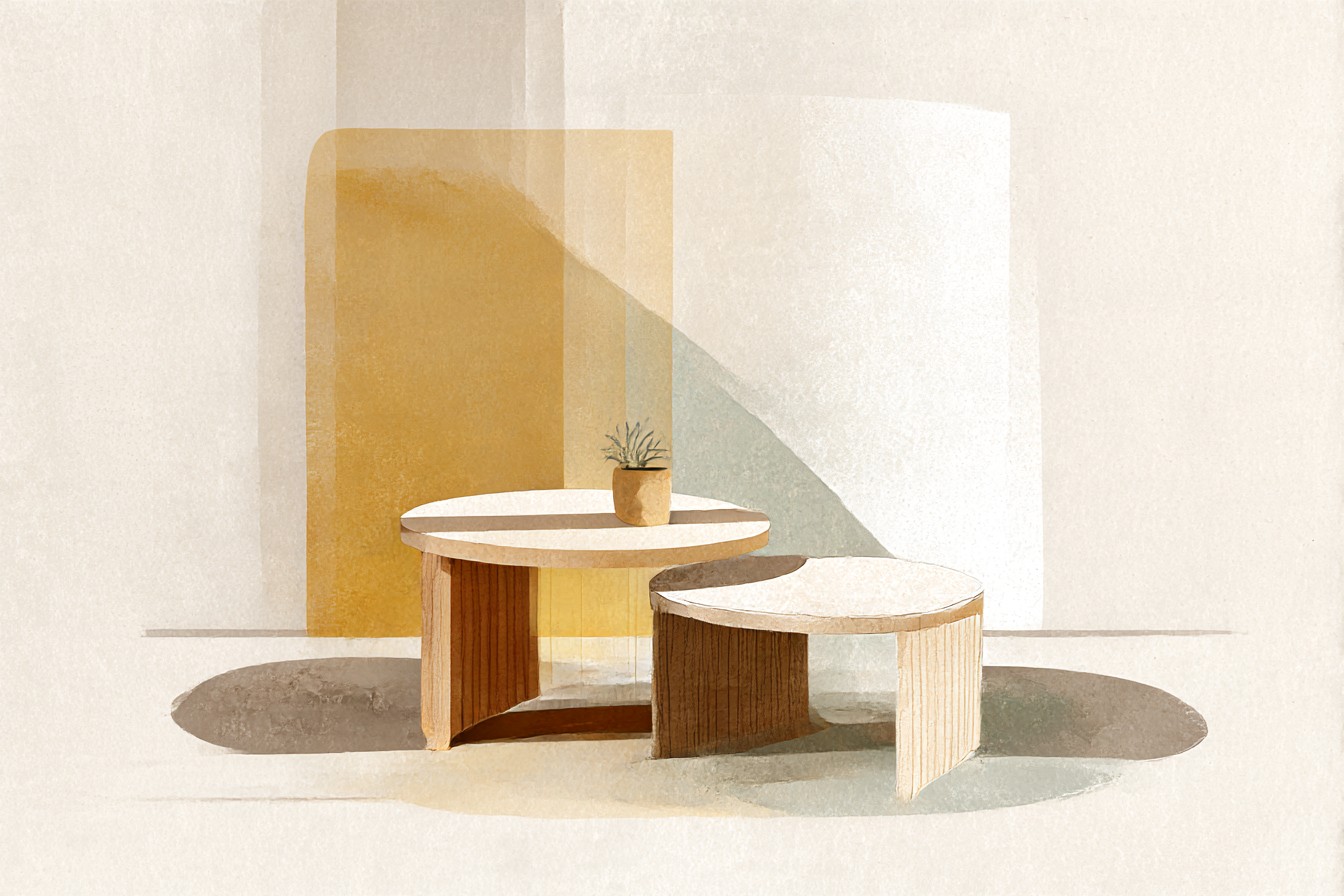
Nesting tables, one that slides under or beside the other, give you the option of two surfaces when you’re hosting and one compact footprint the rest of the time.

My sister’s set, the ones I originally gave her, splits apart when her friends come over for what she insists on calling “wine club” and pushes back together the second everyone leaves, and she’s told me more than once that it’s the only piece of furniture in her apartment that’s ever felt like it was actually designed by someone who has lived in a small space, rather than someone who was designing for a photograph of a small space, which is a distinction that matters more than people give it credit for.
The limitation is obvious. Nesting tables are almost always a matched set by design, so you lose the mixed material, split personality thing I love about my own setup, and the smaller table is usually too low or too small to do serious work on its own. But as an answer to “can I have two tables without living with two tables’ worth of furniture all the time,” it’s the most honest option on this list, and it’s the one I’d have bought first if I’d thought of it before I bought literally everything else.
[Nesting Coffee Tables]
Final Thoughts
So yes, Dana, you can have two coffee tables in a living room, and I said as much back to her in a voice memo that ran considerably longer than a text reply had any business being. The actual question was never whether it’s allowed. It’s what job each table is doing and whether your room’s traffic pattern survives the decision, because a matched pair in too narrow a room will turn every trip to the kitchen into a small negotiation, and two mismatched tables with no real logic between them will just look like you couldn’t decide and gave up halfway through.
I’ve now owned or currently own five coffee tables across one storage unit, one office, one sister’s apartment, and one actual living room, and if that number tells you anything it’s that I’ve made most of the mistakes available to make. The version that’s worked longest for me is the one where each table has an actual job, drinks here, mess there, rather than two tables doing the same job twice and getting in each other’s way. Figure out the job first. The table part is easy after that.