
My mom walked into my living room in November, took one look at the lamp by the couch, and said, “why does it look like you’re running a dentist’s office in here.” That was it. No hello. She’d been in my apartment for four seconds and she was already coming for my light bulbs.
She wasn’t wrong, is the thing. I’d swapped every bulb in the place for these 5000K daylight ones I bought in a six pack because they were $11 cheaper than the warm ones at the hardware store on Eastern Avenue, and I told myself the color temperature “wouldn’t really matter.” It mattered. My white walls, which I’d painted a soft off white called something like Alabaster the summer before, went from looking clean to looking like an exam room under those bulbs. Everything got this flat, slightly blue cast that made my own skin look tired in the mirror by the door.

I sat under it for two months before my mother said the quiet part out loud.
Here’s the thing nobody tells you when you paint your walls white, or Alabaster, or greige, or whatever the paint chip called it: the wall color is only half the equation. The bulb is doing just as much work, arguably more, because it’s the thing lighting the wall, and white in particular has zero pigment to fight back with. A warm bulb over a taupe wall gets absorbed a little. A warm bulb over a stark white wall bounces around the whole room and changes the temperature of everything in it, your skin, your sofa, your mood at 8pm on a Tuesday. Cool bulb, same story in reverse. White walls are basically a blank check that your light bulb cashes however it wants.
I’ve bought, no exaggeration, nine different bulb types in the past year and a half trying to sort this out for my own apartment, which has three rooms all painted variations of the same white because I am nothing if not consistent in my mistakes. Some of these were good buys. A couple were genuinely regrettable, ledger worthy regrettable. So this is me walking through what actually changes when you screw a different bulb into the same white walled room, because it’s not subtle, and it’s not expensive to fix once you know which direction you’re aiming for.
[Light Bulbs for White Walls]
Warm White, 2700K
This is the bulb I should have started with and didn’t, because the packaging for the 2700K ones always looks slightly duller on the shelf, and I judged a box of light by its box, which is exactly the kind of decision that ends up costing you twice.
2700K is the color temperature of an old incandescent bulb, that amber, slightly yellow glow you probably grew up with before everyone switched to LEDs. Over a white wall it does something specific: it warms the wall down a shade or two without actually changing the paint. My Alabaster walls under a 2700K bulb read almost like a warm cream in the evening. Not yellow, not dingy, just softer. It’s the closest thing to cheating I’ve found in this whole exercise.
The tradeoff is that if your white wall already leans warm, has any beige or yellow undertone in the base color, a 2700K bulb can push it further than you want, and suddenly your “crisp white” living room reads a bit like a nicotine stained rental. I found this out in my bedroom, which has warmer white than my living room does, same brand of bulb, and it looked faintly off in a way I couldn’t place for weeks until I actually held the paint chip up next to the wall at night.
Cost wise these run me about $5 a bulb for a decent LED version, and I’ve had the same four running twelve hours a day for over a year without one dying, which works out to under two cents a day per bulb. That’s an easy yes for the good column. I’m one for one on 2700K bulbs actually earning their spot, and I don’t say that about much in my apartment.
[Warm White Bulbs]
Soft White, 3000K
If 2700K is cheating warm, 3000K is the safe middle answer, the one you pick when you cannot commit to a personality for your room and honestly, some rooms shouldn’t have one.
This is where most of my apartment actually landed after the dentist’s office incident. 3000K over a white wall keeps things bright enough to read by without dragging the wall into full amber territory. It’s the temperature that makes a white wall look, for lack of a better word, clean, rather than warm or cold. My kitchen runs 3000K now and it’s the one room nobody has ever commented on, which in my experience is the highest compliment a light bulb can receive. Nobody notices good lighting. They only notice bad lighting.
I did the math on this one properly, twice, because the first time I forgot I’d left two bulbs running in a closet that doesn’t need lighting twelve hours a day, and the number came out wrong. Corrected version, six bulbs, roughly ten hours a day average across the apartment, at about $6 each for the brand I trust after one bad batch of a cheaper one flickered itself into the trash within a month, comes to something like fourteen cents a day total for the whole set. Fourteen cents a day to make my walls look like walls instead of a mood. I’ll take it.
The only place I’d steer you away from 3000K is if your white has a genuinely cool undertone, one of those whites with a blue or gray base. It can look a little muddy, caught between warm and cold and not committing to either, which is the opposite problem from the amber overload but just as annoying to live with once you notice it.
[Soft White Bulbs]
Daylight and Cool White, 5000K and Up
I’m not going to pretend the dentist’s office bulbs were a total loss, because they weren’t, they were just in the wrong room. That’s the lesson buried in that whole mess, not that 5000K is bad, but that it’s specific.
You Might Also Like

Over a white wall, daylight bulbs do exactly what they sound like, they make the room look like it’s lit by an overcast afternoon rather than a lamp. On a stark, cool leaning white, this can look sharp and almost gallery like, genuinely striking in a bathroom or a home office where you want to actually see what you’re doing rather than vibe your way through it. I moved two of my original six daylight bulbs into my bathroom, over the mirror, and that’s the one spot in the apartment where they’ve been right all along. I can see what my eyeliner is actually doing under that light, which I could not under the 2700K bulb I tried there first out of stubbornness.
The problem is scale. Two bulbs in a small bathroom, fine. Six bulbs across a living room and bedroom with white walls and no warm surfaces to counteract it, and you get exactly what my mother walked into, a flat, clinical wash that makes a lived in apartment look like it’s about to be shown to a bank appraiser.
I did lose a little money moving bulbs around rooms they weren’t suited for, not much, we’re talking maybe eight dollars in bulbs that ended up somewhere they didn’t need to be, but it’s a cheap lesson compared to repainting a wall because you blamed the color for what the bulb was doing.
[Daylight Bulbs]
Smart Bulbs You Can Actually Tune
I resisted smart bulbs for close to a year on principle, the principle being that I did not trust an app to control something as basic as whether I could see my own kitchen. My coworker Denise has strong opinions about resale value on basically everything, and she told me smart bulbs “hold zero value the second you screw them in,” which is true and also completely beside the point, because I wasn’t buying them to sell them.
What actually changed my mind was realizing I was buying a new bulb every time I changed my mind about warm versus cool in a room, which by my count was three separate purchases in one bedroom over four months. That’s not a light bulb budget, that’s a hobby I was accidentally funding.
One tunable smart bulb, the kind that lets you slide between roughly 2700K and 6500K from your phone, cost me about $14, more than double what I’d pay for a regular one. But it replaced what would have been three separate bulb purchases as I kept flip flopping on my white bedroom wall’s mood. Do the math on that and it’s actually the cheaper option, which upset me a little to admit given how smug the packaging is.
Over white walls specifically, this is the bulb that finally let me stop guessing. Overcast morning, I slide it cooler for getting ready. Evening, I slide it back down to something closer to 2700K and the same exact wall looks completely different without me touching a paintbrush. That flexibility is worth the markup, at least in the one room where I actually use it.
[Smart Bulbs]
Vintage Filament Bulbs
These are the bulbs I bought entirely for how they look sitting inside a bare bulb fixture, not for what they’d do to my wall color, and I knew that going in, which is the one time in this whole saga I can’t claim I was blindsided by my own decision.
Filament bulbs, the ones with the visible squiggly wire inside clear glass, usually run somewhere around 2200K, even warmer than standard warm white.

Over a white wall they throw this dim, honeyed light that looks fantastic in a photo and is honestly a little useless for actually seeing anything. My white walls under this bulb, in my hallway where I keep one for exactly this reason, go a deep amber in the immediate glow and stay pretty much untouched everywhere the light doesn’t directly reach, so you get this uneven patchwork effect rather than an evenly lit room.
I knew this bulb was wrong for anywhere I needed real light, and I bought it anyway, for the hallway, because the math on one $9 bulb that I love looking at every time I walk past it is math I’m willing to lose on. Not every bulb needs to earn its spot on the ledger through efficiency. Some of them earn it by being the one thing in the apartment that makes my mother stop mid sentence and actually compliment something, which, after the dentist’s office comment, felt like a personal victory.
[Vintage Bulbs]
Final Thoughts
If you take one thing from all this, it’s that a white wall has no opinion of its own, it just reflects whatever you hand it, so the bulb is doing more of the decorating than you think. I spent close to $70 in bulbs across a year and a half figuring that out room by room, which sounds like a lot until you realize repainting even one wall would have cost triple that and still wouldn’t have fixed a problem that was never about the paint.
My rough rule now, warm bulbs where I want the wall to feel lived in, cool ones where I need to actually see, and one tunable bulb in the one room I couldn’t make up my mind about. That’s not a dramatic system. It didn’t need to be. The ledger for the year currently sits pretty comfortable on the good side, and every bulb on it earns that spot for a specific reason I can actually point to, not because it looked right in the store under fluorescent lighting that told me nothing true about my own walls at home.

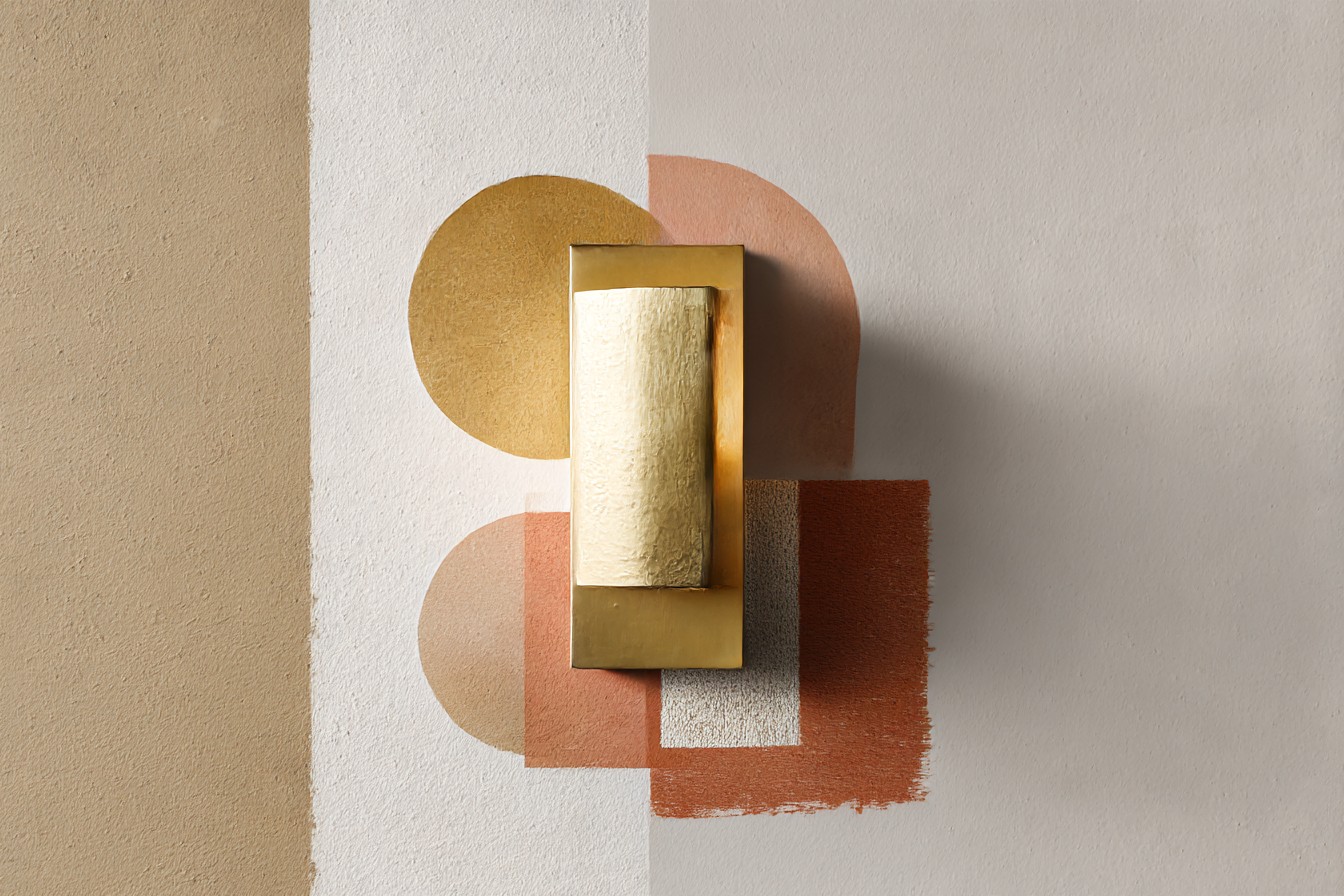


[…] gold reads warmer or colder depending on the bulb temperature you put in it, and putting a cool white bulb in a warm gold fixture is a genuinely upsetting thing to witness, worse than we expected, we […]