
I bought my first chiminea because a colleague at school posted a photo of hers on a Friday afternoon in October, looking extremely pleased with herself, glass of wine in hand, and I thought, that. I want that. What I did not think about, at all, in any capacity, was what was underneath it.
Here is the embarrassing part. I got the thing home, a clay chiminea, terracotta, the kind that looks like it belongs somewhere warmer and drier than Providence, and I put it straight onto the deck boards. No pad. No paver.
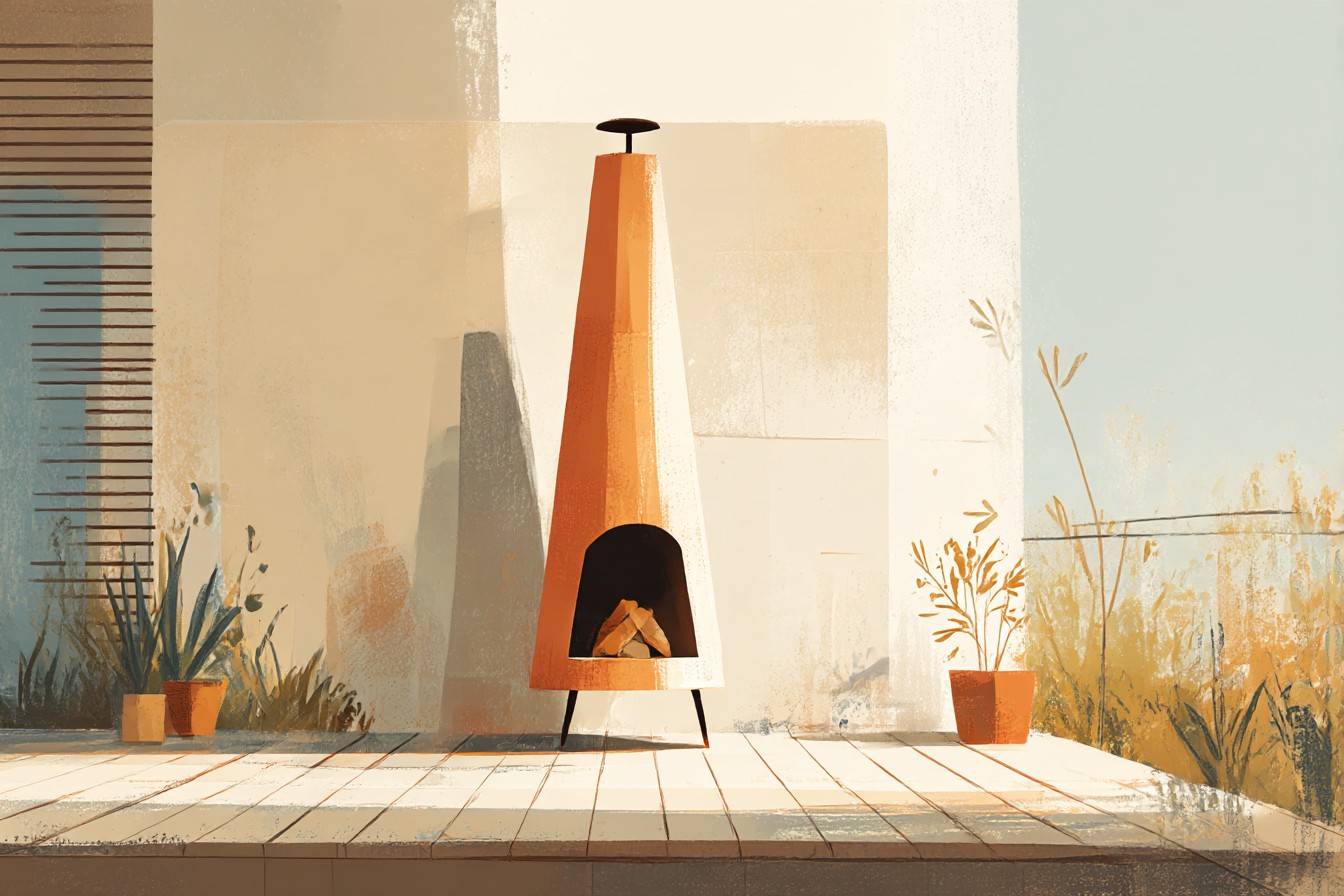
No thought given to the fact that my deck is attached to a hundred and thirty year old triple-decker with cedar shakes on one side and a downstairs tenant, Marisol, who works nights and sleeps during the day. I lit it around seven in the evening, sat there with a book for maybe twenty minutes feeling extremely accomplished, then went inside to deal with a stack of grading because apparently even a nice fire cannot fully override a Sunday night deadline.
I came back out forty minutes later to Marisol standing at the bottom of the fire escape asking, very politely, whether I knew there was smoke coming past her window. There wasn’t a fire, to be clear, nobody was in danger, but there was a scorch mark on the decking about the size of a dinner plate directly under the chiminea’s base, and it was three feet from a wooden railing that has been there since roughly the Eisenhower administration. I spent the rest of that evening not enjoying my fire at all, but standing over it with a garden hose within reach, feeling like the world’s least prepared homeowner.
The chiminea itself was fine. It did exactly what it was built to do. The deck was the problem, and specifically, what I hadn’t put between the two of them. That’s really the whole lesson of this piece before we even get into it properly: a chiminea on a deck is not a chiminea problem, it’s a decking, clearance, and material problem, and nobody tells you that at the garden center, they just sell you the pretty clay pot and let you find out the hard way, at seven in the evening, with a worried tenant standing below you.
[Chiminea on Deck]
What Actually Goes Underneath It
This is the bit everyone searches for and the bit garden centers gloss over fastest, because a heat resistant pad is not nearly as fun to sell as the chiminea itself. After my scorch mark incident I did what I always do when the house has embarrassed me, I over-researched it for a week and bought the least attractive solution available. In this case, a mineral fiber hearth pad rated for direct contact with hot fireplace equipment, the kind you’d put under a wood stove inside a house, not something marketed for decks at all. It’s not pretty. It’s a flat grey rectangle that looks like a yoga mat had a very serious falling out with itself. But it sits directly under the chiminea’s base and it has taken every bit of radiant heat since without a single new mark on the boards beneath it.
Pavers work too, and a lot of people go that route, laying two or three concrete patio pavers down first and setting the chiminea on top of those, which raises the whole thing slightly and adds a layer of thermal mass between the fire and the wood. I’d argue the pad is more reliable because it’s designed specifically for heat transfer, whereas pavers can still get hot enough on the underside to matter over a long evening, but either beats what I did originally, which was nothing, on the theory that clay doesn’t get that hot. Clay gets that hot. I have the dinner plate sized proof.
[Heat Shields and Pads]
Clay Versus Cast Iron, and Why It Changes the Answer
I went clay first because it looked right on the deck, warm and a little rustic, the kind of thing you’d photograph next to a glass of wine, as previously discussed. What nobody mentioned is that clay and cast iron behave completely differently once they’re actually lit, and that difference matters enormously for what you put underneath and how far from anything wooden you keep them.
Clay retains heat more gently and cracks under sudden temperature swings, which is its own separate problem I learned about the following spring when a surprise April frost split mine straight down one side overnight, having been left out uncovered, a mistake I’ll get to properly later. But on the deck specifically, clay’s advantage is that it doesn’t stay dangerously hot for as long after the fire’s out. Cast iron is the opposite story. It heats up slower, holds that heat for a genuinely long time afterward, sometimes an hour or more of the base still being too hot to touch, and it weighs enough that I started worrying, entirely reasonably for a building this old, about whether my deck joists were built with a hundred plus pounds of iron in mind. They weren’t designed with any of this in mind, they were designed for people to sit on, so if you’re going cast iron, it’s worth actually checking where your deck’s support beams run and setting the thing over them rather than out in the middle of a span.
Neither material makes the base safe on its own. Both still need the pad. Cast iron just makes the case for it more urgently, for longer.
[Clay and Cast Iron Chimineas]
The Composite Decking Problem Nobody Warns You About
A friend of mine, Deb, had her deck redone a few years back in composite boards, the wood plastic kind that never needs staining and everyone assumes is basically indestructible because it doesn’t rot. She put her chiminea on it with a paver underneath, which is more forethought than I managed, and still ended up with a soft, slightly warped patch in one board after a single evening, because composite doesn’t scorch the way real wood does, it can actually deform and discolor at temperatures that wouldn’t leave a mark on cedar or pressure treated pine.
You Might Also Like

This is the part that surprises people. Composite feels tougher, it resists water and splinters and generally behaves like the responsible adult of decking materials, but its heat tolerance is not automatically better, and in some cases it’s worse, because the plastic content softens well before the wood fibers around it would char. If you’ve got composite decking, the safe zone under and around a chiminea needs to be bigger, not smaller, and the pad underneath needs to actually be rated for sustained heat rather than just splash or spill protection, which is what a lot of composite specific deck accessories are built for instead.
Deb’s fix in the end was a raised iron fire pit stand with legs, keeping the whole unit a few inches clear of the boards entirely, plus the pad besides. Belt and suspenders, and given what her deck cost her, I don’t blame her one bit.
[Composite Decking]
Where It Actually Sits, Relative to Everything Else
I mentioned the railing earlier and I want to come back to it properly because clearance is where I see people cut corners even after they’ve sorted out what’s underneath the thing. Three feet from a wooden railing is not enough. I know this because it’s what I had, and while nothing caught fire that October evening, the heat had visibly discolored the railing’s paint by the following morning, a faint yellowing I hadn’t noticed in the dark. I moved it to a spot with a clear five feet on every side after that, which on a smaller deck sounds like it eats the whole space, and on mine, frankly, it nearly did.
Overhangs matter just as much as railings, maybe more. A lot of triple-decker porches, mine included, have a roofline extending out over part of the deck, and sparks rising from an open chiminea front can drift up into gutters or under eaves faster than you’d expect, especially with any wind at all. I keep mine well clear of the covered section now, out under open sky, which also happens to be where the smoke bothers Marisol’s window least, so that particular relationship has improved considerably.
Wind direction is the last piece, and the one people think about least until a gust sends sparks sideways toward a rug or a stack of the previous winter’s firewood. I check which way the evening breeze is running before I light anything at all now. It takes ten seconds and it has changed exactly where I sit twice this year.
[Deck Placement and Clearance]
Covers, Off Season Storage, and the Ash Nobody Deals With Properly
The frost crack I mentioned earlier happened because I left the chiminea uncovered through a stretch of unseasonably cold April nights, having assumed, incorrectly, that clay which survives fire can survive frost. It cannot, not reliably, not when there’s any residual moisture sitting in the material from a rain shower a few days before. A proper fitted cover, the kind that actually cinches at the base rather than just draping over the top, has prevented a repeat of that particular failure, and it’s cheap enough that there’s no good excuse not to own one if you’re leaving the thing outside from November through March, which, in this part of New England, most of us are.
Ash management is the less dramatic but equally important habit. I used to let ash build up in the base for weeks, telling myself it insulated the next fire somehow.
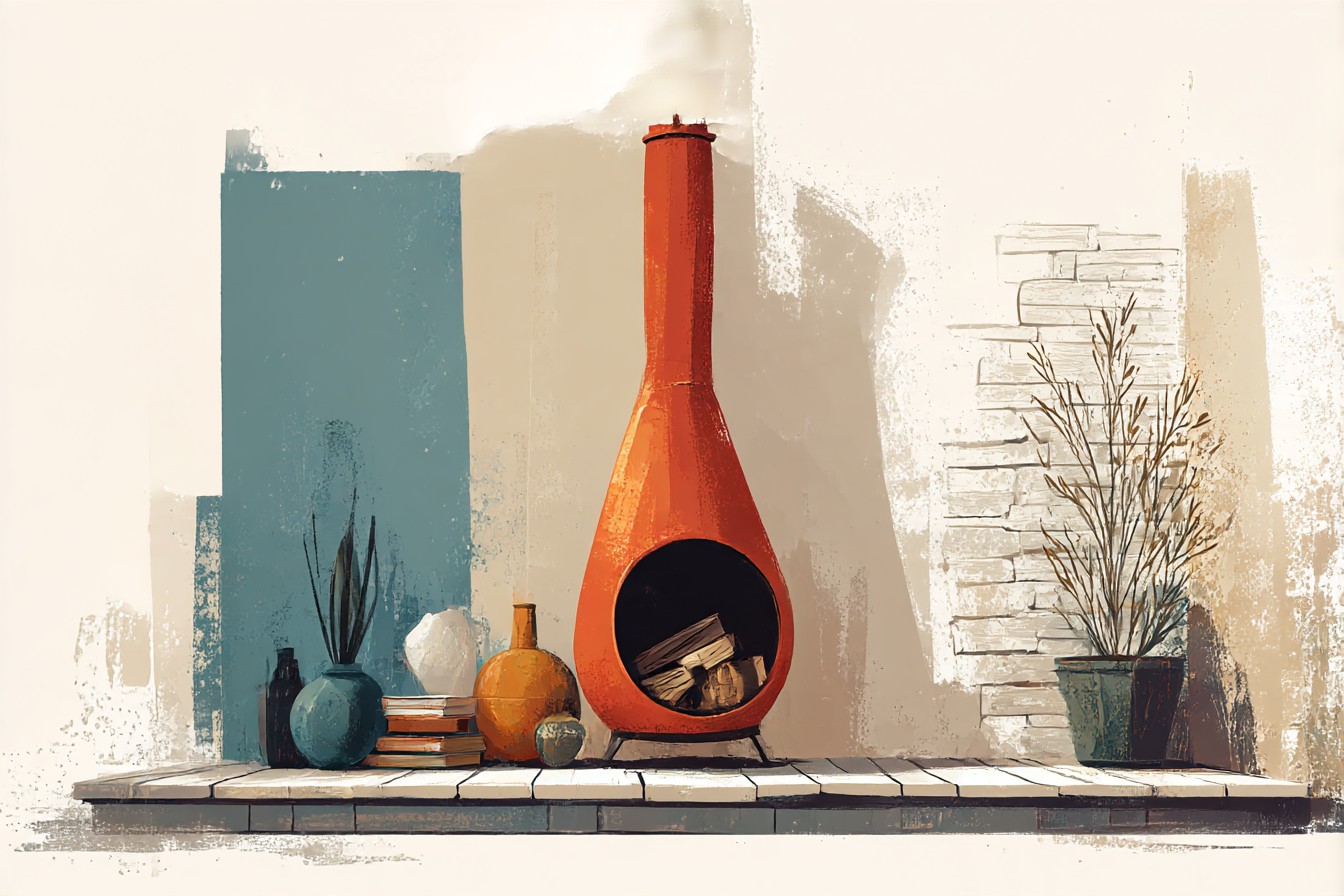
It doesn’t insulate anything useful, it just holds heat and embers far longer than the cooled looking surface suggests, and a bucket of what looks like dead grey ash can still be warm enough to scorch a deck board if it’s emptied straight onto one, which is a mistake I have made exactly once and will not be repeating. Metal ash bucket, always, set on its own separate paver, never straight onto the boards, even once the fire itself looks completely finished.
[Chiminea Covers and Ash Care]
Final Thoughts
None of this is really about the chiminea. Every version I’ve owned or seen owned, clay, cast iron, the good ones and the cheap ones from the hardware store end cap in September, has worked exactly as advertised. The actual variable, every single time, has been the deck underneath it, what it’s made of, how far the nearest railing sits, whether there’s a proper pad doing the quiet unglamorous work of keeping a hundred year old building from finding out the hard way that it’s flammable.
I still have the chiminea. I still love sitting out there some evenings with the fire going and a book I’m not really reading. But the whole setup now involves a grey mineral pad that photographs terribly, five feet of clearance I had to actually measure with a tape, and a metal ash bucket that lives permanently on its own separate paver, and none of that is exciting to write about, which is probably exactly why nobody selling you the chiminea mentions it. Get the pretty part right by all means. Just get the boring part underneath it right first.


[…] for the same reason as the terracotta situation up above, it just amplifies rather than contrasts. Worth knowing before you order it, because velvet in the wrong color doesn’t just clash quietly, it clashes […]
[…] your water comes from a well and has a strong mineral smell or a rust tint, that’s worth knowing about, but it’s rarely worth treating specifically for the birds, they’re more tolerant […]
[…] has no plans, and it does not read as “secretly a bed” the way the others do, which is worth something if you host people who don’t need to know that detail before […]