There’s something about your arm dangling off the end of the bed as it slams into the wall that lets you know your bedroom is too small. This is true whether you’re moving in or moving out. Sure, the estate agent rubs their hands gleefully as they assure you it’s “cosy proportions” you’re seeing.
Sure, you want to believe it when you totter round the room wielding a tape measure for the fifth time, constantly dislodging its spring as you pointlessly snap it back and forth. But trust me. You know.
I’ve spent years living in very small bedrooms. My very first flat came equipped with a bedroom so small I couldn’t open my wardrobe door if I was standing at the foot of the bed.

Excellent choice architecturally, past-Emma.
I would crab-walk around my bed every morning for six months like a particularly domesticated crustacean as a direct result of your decisions. The bedroom was 8ft by 9ft – hardly palatial – but small enough that you couldn’t fit a double bed, a bedside table, and room to swing a cat without some seriously savvy sofa-spacedancing. Over the years though, cramming my life into small bedrooms, I’ve learnt a few lessons.
The first is that square footage isn’t everything – unless it’s actually square footage you can walk across. Can you walk around your bed? Can you open dresser drawers without closing the door first?
These may seem like luxurious considerations when you’re juggling room dimensions in your head but trust me, they will save you every single morning. So, my rule of thumb is that the smallest bedroom you should have is 9ft by 10ft. Why 9 by 10?
Well that gives you 90 square feet. Which sounds tiny (because it is) but actually, it’s doable. I lived in a bedroom which was 9 by 11 for two years.
It wasn’t enormous but it wasn’t a struggle to get ready for work each morning either. The key is ensuring you always have at least two feet of clearance on at least two sides of your bed. Any less and you’ll constantly be having to squeeze past your furniture to get somewhere you really shouldn’t be squeezing past your furniture to get to in the first place.
Obviously, the more space you have the better. Bumping that bed up to 10 feet by 11 gives you 110 square feet. I once viewed a flat that had these exact dimensions.
Having just come from the 8×9 crab-walk nightmare flat I thought I was moving into a palace. You can fit a standard double bed with enough room for bedside tables on both sides. MADNESS.
You can. Bedside tables on both sides. My bedroom now is 10 feet by 11 and I love it.
You can fit so much more furniture without it feeling cluttered. You’ve got space for a chest of drawers or small chair if you like. Small bedrooms are a constant game of negotiating your furniture wants vs needs.
That cute little chest of drawers you fell in love with online? Chances are it’s not going to fit. The four-poster bed will look incredible but are you really prepared to get married to a king-size bed?
You Might Also Like
I learnt this the painful way by ordering a 6 foot wide chest of drawers without measuring the space beside my bed. It arrived two weeks later and I clicked together the bits excitedly. It was only when I tried to put it in its intended place that I realised I’d have to clamber over my bed to reach the window.
Rookie. Double beds measure around 4.5 feet by 6.25 feet. With the bed frame on top of that, you’re probably looking at needing 5 feet by 6.5 feet of room at least.
If you want to be able to walk on both sides of the bed you’re looking at needing at least 2 feet of clearance on either side plus at the foot of the bed if you’re going to do stuff like make the bed without breaking into a pretzel position every morning. Crikey that 9×10 room isn’t sounding quite so generous is it? Anyway, you get the point.
Once you remove the space your bed takes up (remember to account for space to walk around it too) you’re forced to be much more considered with what else you can cram into your tiny bedroom. I’ve lived with beds that disappear underneath heaps of storage drawers. Beds with built-in storage – again,great for storage until you actually want to access said storage and realise you’ve created an anchor weigh of winter woollies on your bedroom floor.
Platform beds, bed_frames with ridiculous angles to them. Wall-mounted bedside tables (they kind of always look like you bought them from a hospital not an interiors shop). What made the most difference for me?
Changing my bed from the traditional wooden bed frame that was about a foot and a half off the ground, to a sleeker, lower-profile platform style. My old bed felt like it took up nearly half the room just due to how high up it sat. Now my bed frame is about a foot off the ground, my room feels taller and bigger.
Less furniture touches the floor = more space. It’s as simple as that. Under-bed storage boxes are lifesavers.
Get the clear plastic ones so you can see what’s in them. Invest in some wall shelves but be strategic. Put them too low and you’ll knock them every time you pass.
High enough and you’ll never actually use them since they’re out of reach of daily items. Lights!
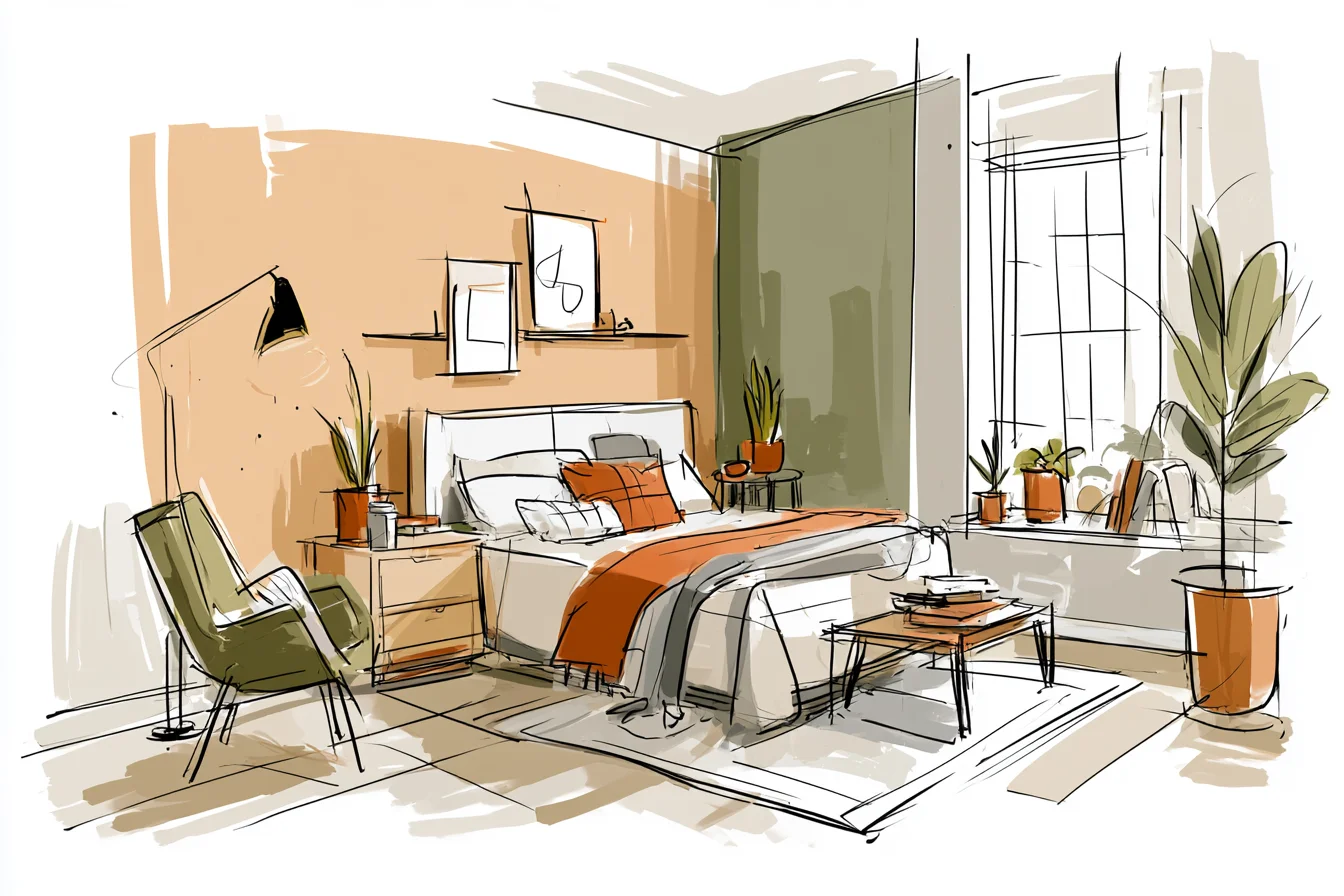
People forget about lights until they see the dusty old ceiling bulb shining down in their dream small bedroom.
Layer your lighting with a bedside lamp and some ping-pong-ball-string-lights I’m not judging, add a small lamp on the chest of drawers. The worst thing I think you can do is try and fit too much furniture into a small bedroom. We’re all guilty of it.
Space is at a premium so every piece of furniture has to earn its place on your cramped floor space. But that chair you only ever planned to use as a reading chair? It’s not a reading chair, it’s shit taking up valuable square footage.
Maybe one dresser was enough? TLDR: Having a small bedroom is far from ideal, but it doesn’t have to suck. For me, around 120 square feet – so probably 10×12 or 11×11 – is ideal.
That way you can fit a double bed, two bedside tables, a decent wardrobe/dresser and still have room to move around. Don’t underestimate how much of a difference a couple of extra feet makes.