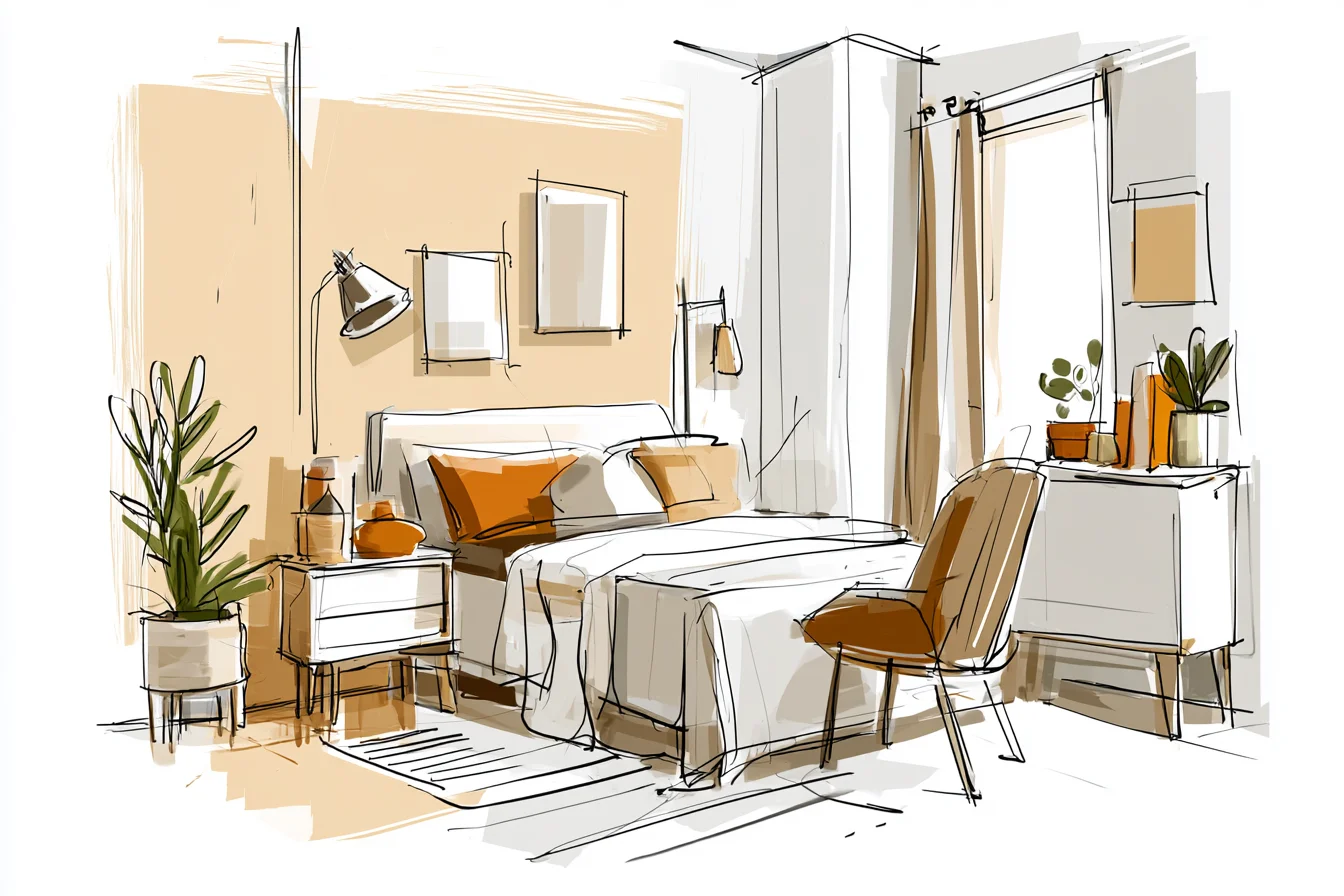
My biggest takeaway living in a small bedroom is that when you live in one, it’s hard work getting into it every morning. I discovered this halfway through renting my current flat when I realised my bedroom was nowhere near as relaxing as it could be. My landlord markets the master bedroom of our house as snug — by which I mean you can touch both walls when you stretch your arms out if you stand in the middle of the room.
I made the rookie mistake of trying to fit all my stuff into the room at first. It felt cluttered. Every morning I stubbed my toe on the dresser, knocked over the bedside lamp reaching for my phone charger and generally stressed myself out before I even opened my eyes.
I knew something had to give when I was there for three months before actually admitting that nope — this wasn’t working. So I took everything out and started from scratch.
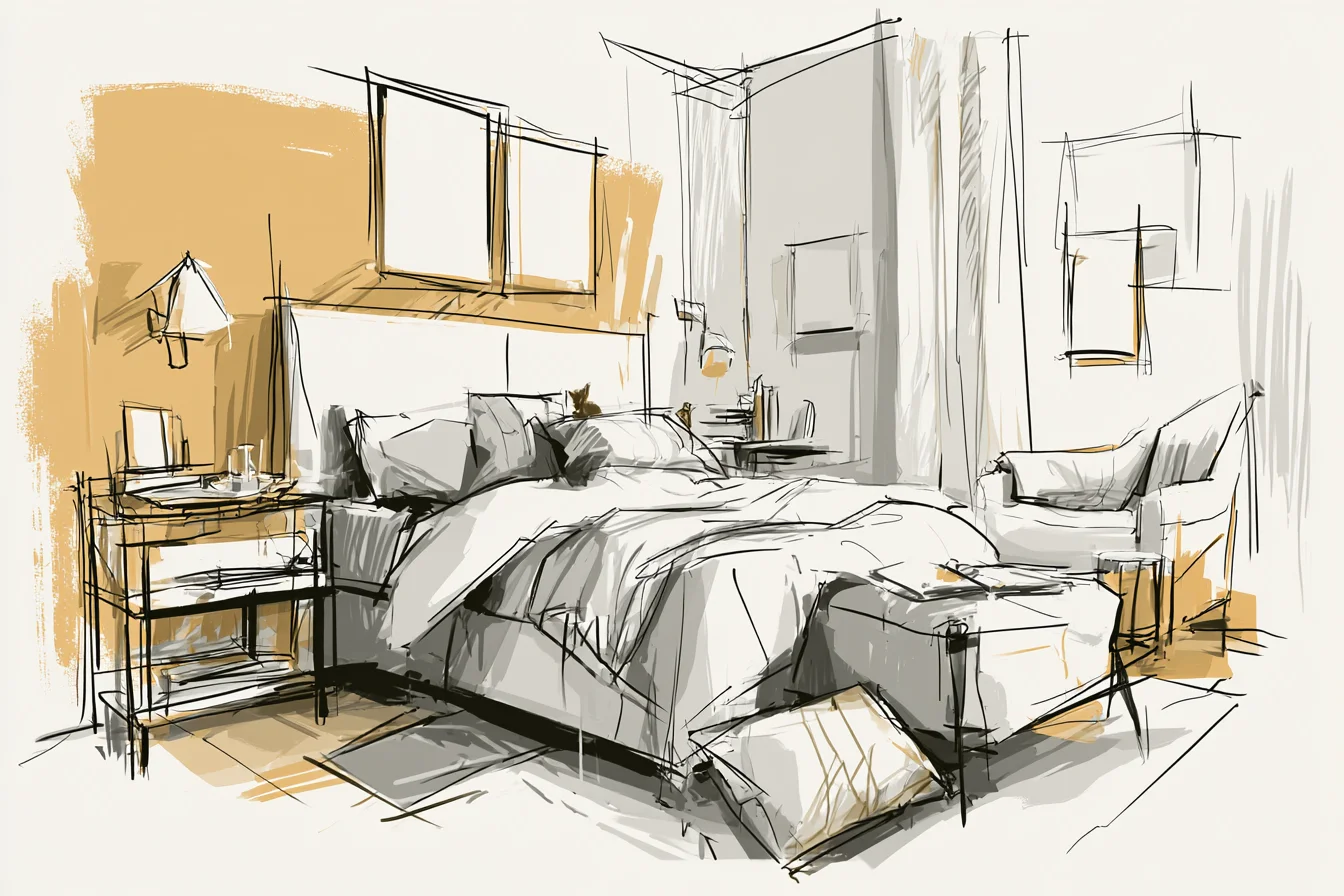
Literally.
First up was paint. Whoever lived in the flat previously thought beige was neutral and took it to…extremes. We painted the walls a dusty blue instead.
Not navy, not powder blue but a nice gentle dust color. It cost us around £30 for the paint and a couple of weekends of painstakingly cutting-in by the skirting boards (my least favourite DIY job EVER), but it made SUCH a difference to the room. Suddenly it looked twice the size and felt instantly more peaceful.
Here’s a hot tip I wish I knew about when decorating: dark colours don’t always make a room feel smaller. In fact, our dusty blue paint colour actually made the walls recede, especially when the morning sun hit them. I think it’s because it’s dark enough that it’s interesting to look at but not so dark that it closes in on you.
If you’re worried about going dark, go for muted tones instead of bright whites. White would have worked wallcoverings-wise, of course, but would have looked too sterile for a bedroom. Next up was replacing our bulky built-in wardrobe with a rail and curtain combo.
We got rid of the wardrobe (and made £50 in the process!) and hung a rail across one wall with a curtain over it to mask the clothes. It cost us about half of what we sold the wardrobe for to DIY our own curtain closet, and suddenly we had floor space! Our curtain is just a plain white linen one, nothing too fancy.
It helps to disguise the clothes but doesn’t close off the room as a big heavy door would. Trust me on this one: bedside tables are essential for making a small bedroom work, but they don’t have to be traditional ones. I originally had some large wooden ones but they took up so much room.
We replaced them with floating shelves instead — two plain white shelf supports with a thin wooden shelf mounted on the wall. They’re perfect for holding books, a lamp, and my water glass overnight but don’t interrupt the view when you’re standing anywhere else in the room. Speaking of furniture earning its place, our bed was next.
We upgraded to a bed with built-in storage — not the annoying gas lift type that always seem to break (trust me, I learnt my lesson doing that in flat 1), just a basic platform bed with drawers underneath. All my out-of-season clothing is now stored under the bed which meant we could ditch another bulky item of furniture. Lighting is by far the biggest game changer in there.
You Might Also Like
We kept the original overhead light because it’s handy for putting on but it’s harsh and unflattering. Think big brass clip-on job that belongs in an office not a bedroom. Instead I have three sources of light; the small lamp on each floating shelf (we used warm LED bulbs that mimic real incandescent light bulbs) and a string of fairy lights taped to the headboard.
This last one may seem a bit too “Christmas cottage core” for some people but hear me out. The fairy lights aren’t coloured; they’re warm white. They provide a gentle, ambient light in the evenings that just makes the room feel cozy.
Oh and I originally just forgot to take them down after a party! Then bought some thermal ones with a timer so they automatically turn on at sunset and switch off after two hours. Game changer.
We live in the north of England. Our bedroom gets the full force of British mornings since it faces east. As in, it’s brutal trying to sleep in on weekends.
We couldn’t afford blackout curtains but after doing some research into sustainable materials we discovered white linen. They let in plenty of sunshine during the day, but we popped a blackout blind behind them so I can close them when I want to sleep in. Honestly, the best of both worlds.
Decor is very much kept to a minimum but with intent. A large mirror opposite the window reflects light around the room and makes it feel bigger. One large piece of wall art above the bed; this simple line drawing I picked up from Etsy for £40.
Plants! A snake plant on the floor, which is ideal for neglectful people like me, and a small pothos I let trail down one of the floating shelves. In total I spent less than £300 over the course of two months redecorating and buying a few new bits.
The largest expenses were the bedframe and paint. Most of it was actually just shifting things around and donating furniture that wasn’t “making the cut” and then making use of what we had with clever lighting. The one thing I didn’t expect?
Sleeping better.
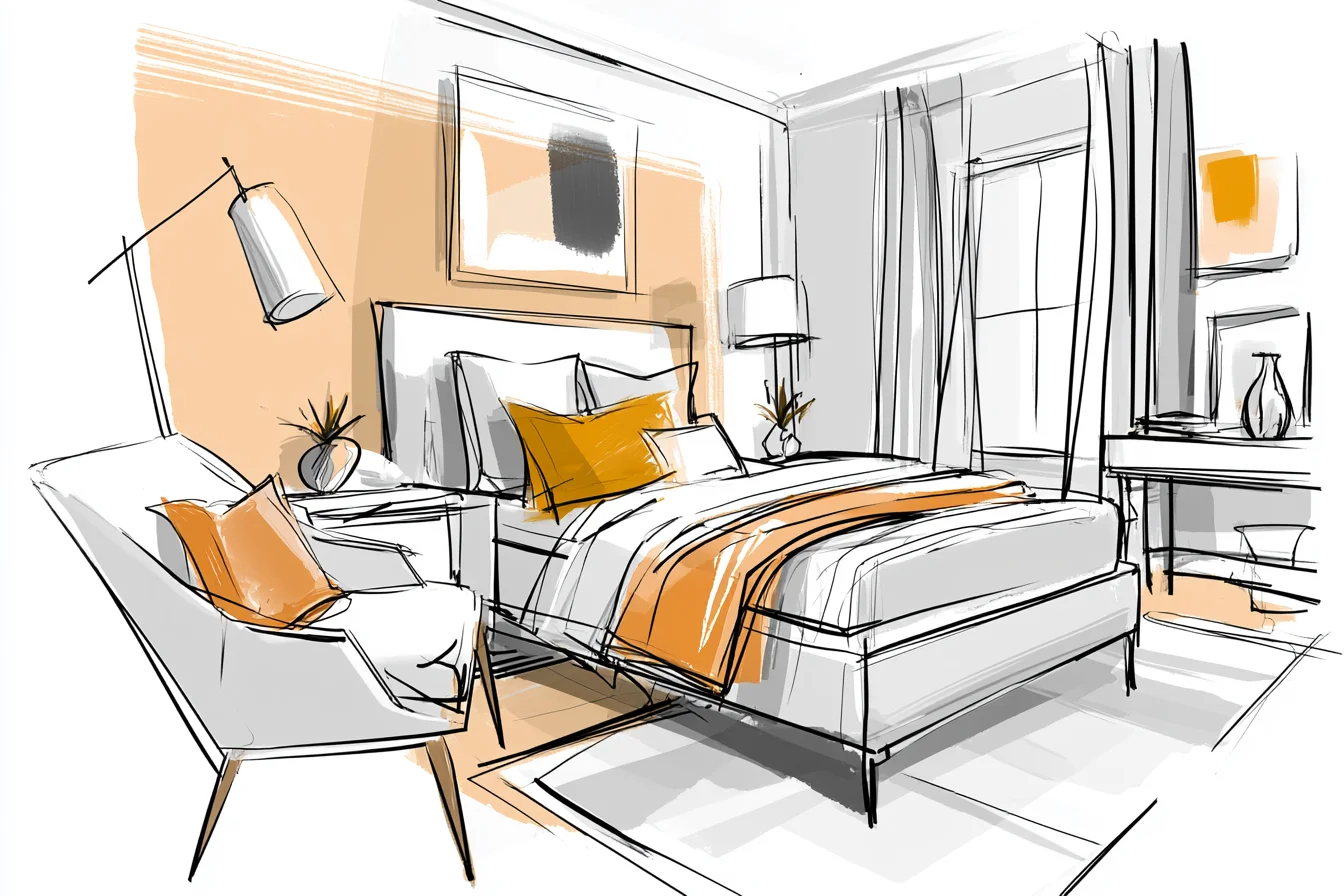
I hadn’t realised until I sat down and decluttered just how much the chaos in my bedroom was impacting my ability to switch off at night. As soon as I’d created a relaxing sanctuary for myself, I found it easier to sleep.
Clear out your room and you’ll feel more zen in no time. Asking myself what made the biggest difference, I’d say visual clutter. Once I took everything out of my room I realised peaceful doesn’t have to mean sparse.
It just has to be curated; everything has a place and there’s not a single thing in my room that’s there just because I couldn’t think of somewhere else to store it. Small bedrooms can be retreats. They’re just harder work than big ones.
Less clutter, more intention. And honestly, I never want to go back to a big bedroom now we’re used to ours. Loving having my own little cocoon to wrap myself up in every night.