When I moved into my house, my bed was touching three walls. It’s a full-size bed pushed up against three walls in what estate agents like to describe as a “cosy” second bedroom. Translation: about 8ft by 10ft of usable floor space.
My initial thoughts upon buying the bed were A) Oh god. B) We’ll fit it somehow. C) Nevermind, just move me into a dorm room with a futon forever.
No, seriously. When faced with less-than-ideal circumstances, I did everything I could to avoid sleeping on a fancy hostel-style mattress for the rest of my twenties.
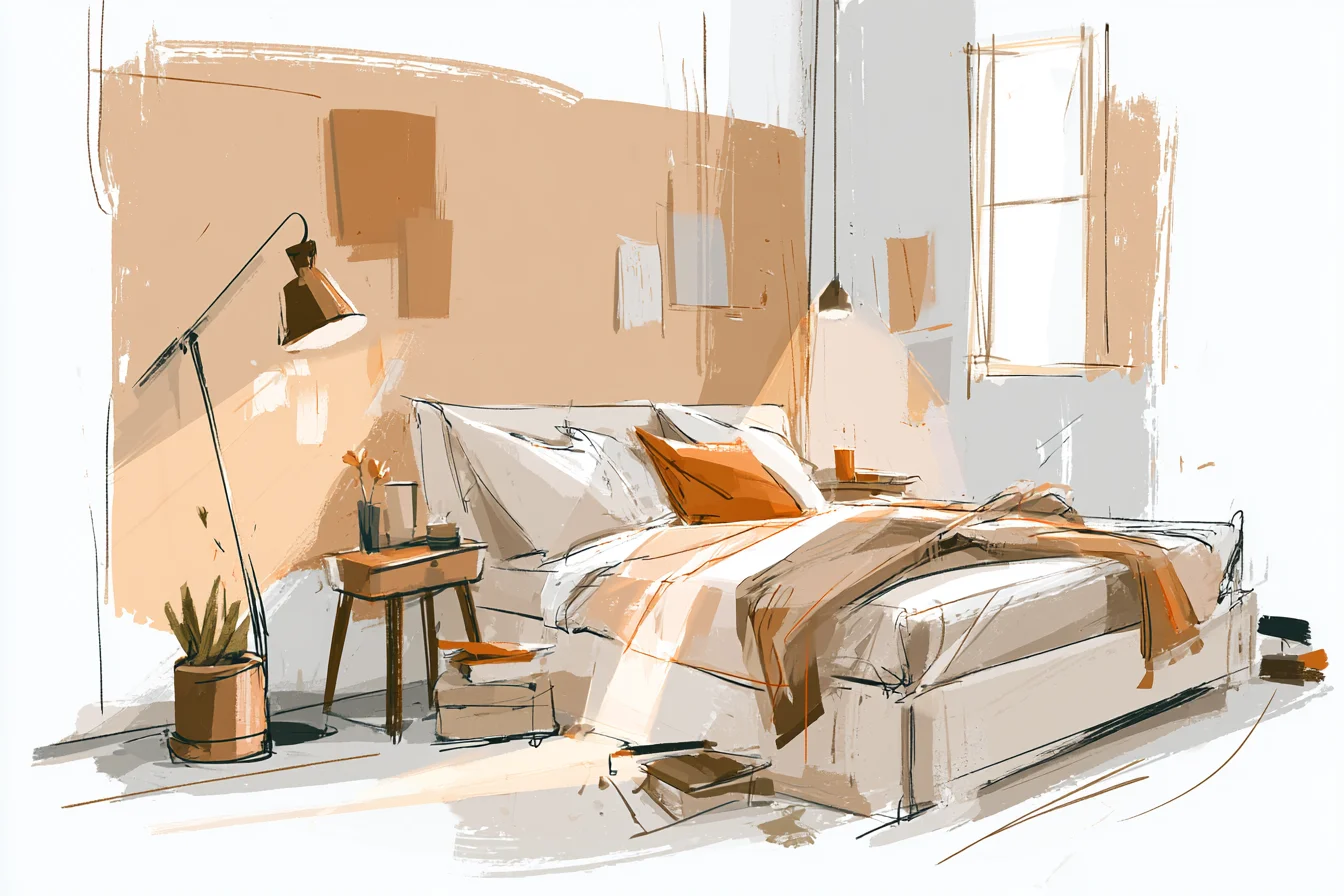
Small rooms can be cosy.
If you want them to be, anyway. While I was initially horrified by how small my room was, I spent many nights fighting with my wardrobe door (which hit the headboard every.single.morning) while doing this ridiculous sideways shuffle just to access my clothes. It wasn’t cute.
It wasn’t my idea of a relaxing bedroom sanctuary. Instead of banging my head against the problem (or wardrobe), I thought outside the box. Or building, as it were.
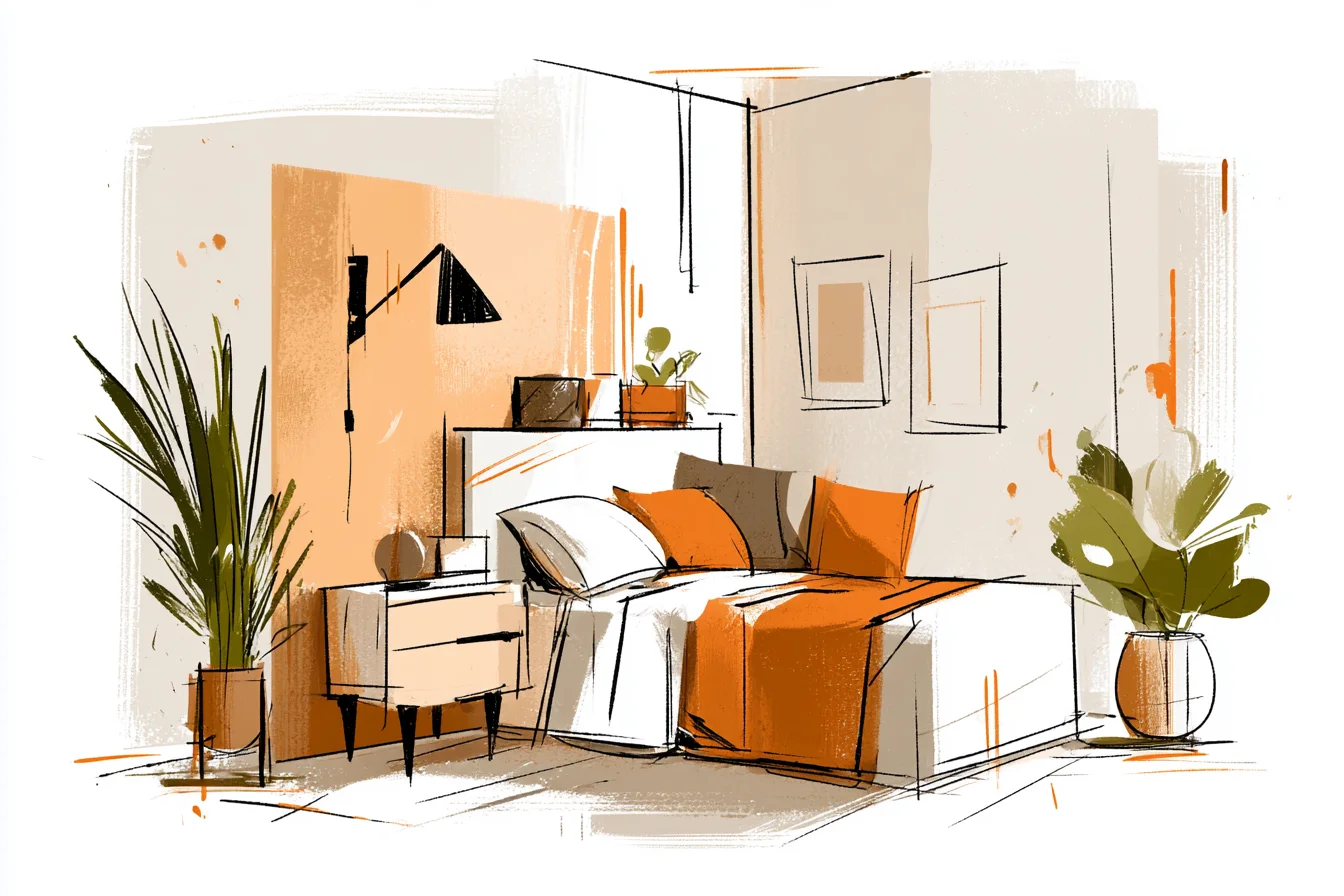
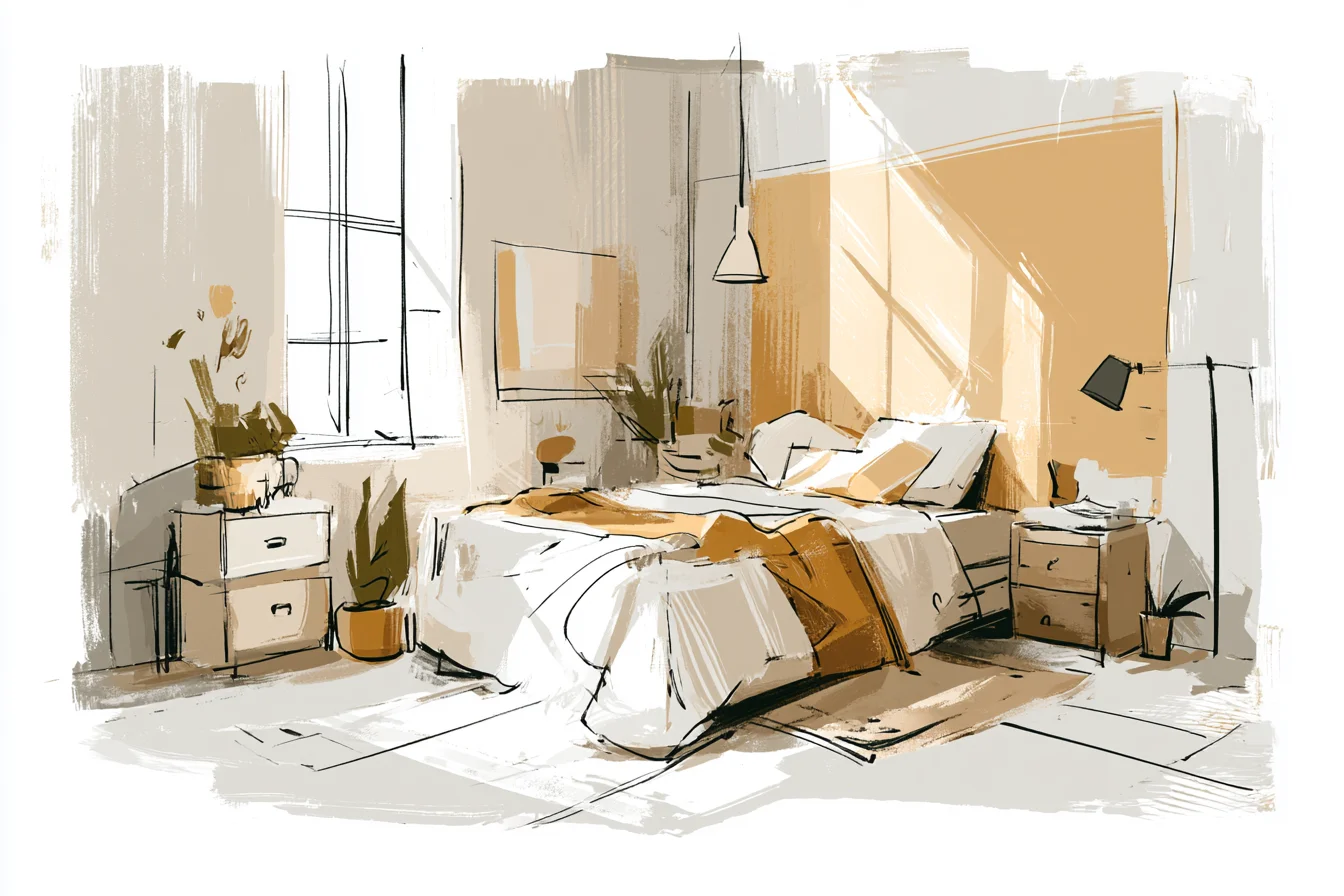
I angled my bed roughly 15 degrees away from the wall. It felt ridiculous at first, but it also allowed me to easily walk around both sides of my bed instead of shimmying across the mattress to access the window. Now that my bed was diagonal, I had space to add furniture that otherwise wouldn’t have fit.
I picked up a skinny console-style table to tuck behind my headboard; it’s nothing special, I just found a £40 table from IKEA and spray painted it sage to match my accent wall. It’s slim enough that it doesn’t crowd my tiny bedside table, but gives me somewhere to stack books and a lamp as well as charge my phone. While I still use a bedside table, I don’t have traditional bulky nightstands taking up valuable square footage.
Instead, I installed two floating shelves at the height of my mattress. They’re only about 18 inches wide (think hand-width), and not very deep either. Deep enough to hold a book and a water glass, but not so deep that I’ll smash my shin on them while blindly searching for my toothbrush at 2am.
Bonus: They only cost me about £25 for both and look intentional rather than desperate. Closet space was the downfall of this apartment. When I first moved in, my clothes were in three different locations.
The built-in wardrobe wasn’t worth using — it would have maybe housed five dresses and a winter coat. I started with those vacuum storage bags you suck all the air out of. Don’t do this.
They suck. Literally. Nothing came out unwrinkled, and they squeaked when you moved them like some kind of monster sex toy.
No Zen oasis vibes here. Skip the vacuum bags and go vertical. Put up floor-to-ceiling shelving on one wall.
This gives you the ability to stagger your shelves (using adjustable shelving brackets) to create a large area for shoes and bags at the bottom, folded clothing stored in cube-shaped fabric boxes in the middle, and out-of-season clothing at the top. Yes, my entire closet lives on open shelving. It cost me about £120 to build, but tripled my storage capacity and looks like built-in shelving rather than my spinning my wheels trying to fit everything into nothing.
You Might Also Like
Trust me, I tried putting all the lighting on one ceiling fixture and living in shadowy despair. Since the builder-grade boob light that came with the house is still in use, I layer other light sources: the lamp on the skinny console behind my bed, some warm-white LED string lights near the top of my shelving unit, and a small clip-on reading light attached to one of my floating shelves. Layering light is important in any space, but when you have limited square footage, it’s essential.
It allows you to change the mood of the room at different times of day, and you have options when you’re waking up or winding down. Mirrors are life. Everyone knows this, but the problem is that most small-space articles tell you to mount a giant mirror over your sofa.
Newsflash: I don’t have a sofa. My bedroom is so small I don’t even have dedicated wall space for one big mirror. Instead, I bought a few small mirrors in different frames (bonus points if they’re vintage brass or distressed wood) and hung them salon-style on the wall opposite my bedroom window.
The wall of mirrors isn’t just reflecting light around the room (though it does do that too); it creates visual interest that distracts from the fact that my room is tiny. Don’t paint every wall the same color to “open up” the space. Another thing I thought would work: painting every wall Benjamin Moore’s Whisper White.
Bright colors are great for making a room feel larger, but too much bright white just makes things feel sterile and smaller. So paint your walls whatever color you want, but use a deeper color on one wall to create depth. In my room, I painted three walls Benjamin Moore’s Cream Sail and used the sage green on the accent wall behind my bed.
The darker green anchors the wall, making it feel heavier and causing your eyes to “skip over” the bed when you first walk in. In theory, it makes my room look longer than it actually is. Finally, add texture.
Before you go out and buy every fuzzy throw pillow known to mankind, hear me out. I’m talking about adding layers of fabric that don’t take up any extra square footage. A chunky knit throw on the end of your bed, linen sheers instead of heavy drapes, a jute rug that hangs down about six inches on either side of your bed frame.
You get the idea. Each layer adds “weight” to your space without you having to dedicate any more precious floor area. Hang your curtains as high and as wide as possible.
I hung my curtain rod almost to the ceiling, and extended it about five inches past the window on either side. When your curtains are open, you won’t be able to see where your window frame actually ends. Trick your eye into thinking your windows are twice the size.
Pinky swear it works. Wait, what’s that smell?
Shame burning.
I refused to accept that I didn’t have space for everything I owned until months into living here. I donated the oversized armchair I loved because it took up too much room. Said goodbye to my collection of Craigslist-found vintage pillows until I was left with two.
Design isn’t always about adding things, sometimes it’s about subtracting. Today I love my bedroom. It doesn’t feel big and it never will, but it’s cozy and – dare I say it- zen.
I’ve had friends and family spend the night who compliment the room without knowing anything I’ve written here. They think it looks “cozy”, comment on how they never would have thought to angle my bed and love how the mirrors reflect the bed. They don’t know the editing I’ve had to do to these photos to disguise my clutter, or the countless nights I spent measuring and remeasuring where things would (and wouldn’t) fit.
But that’s the beauty of making the most out of a small bedroom. You realize that having good design isn’t about how much space you have; it’s about how you use what you’ve got.