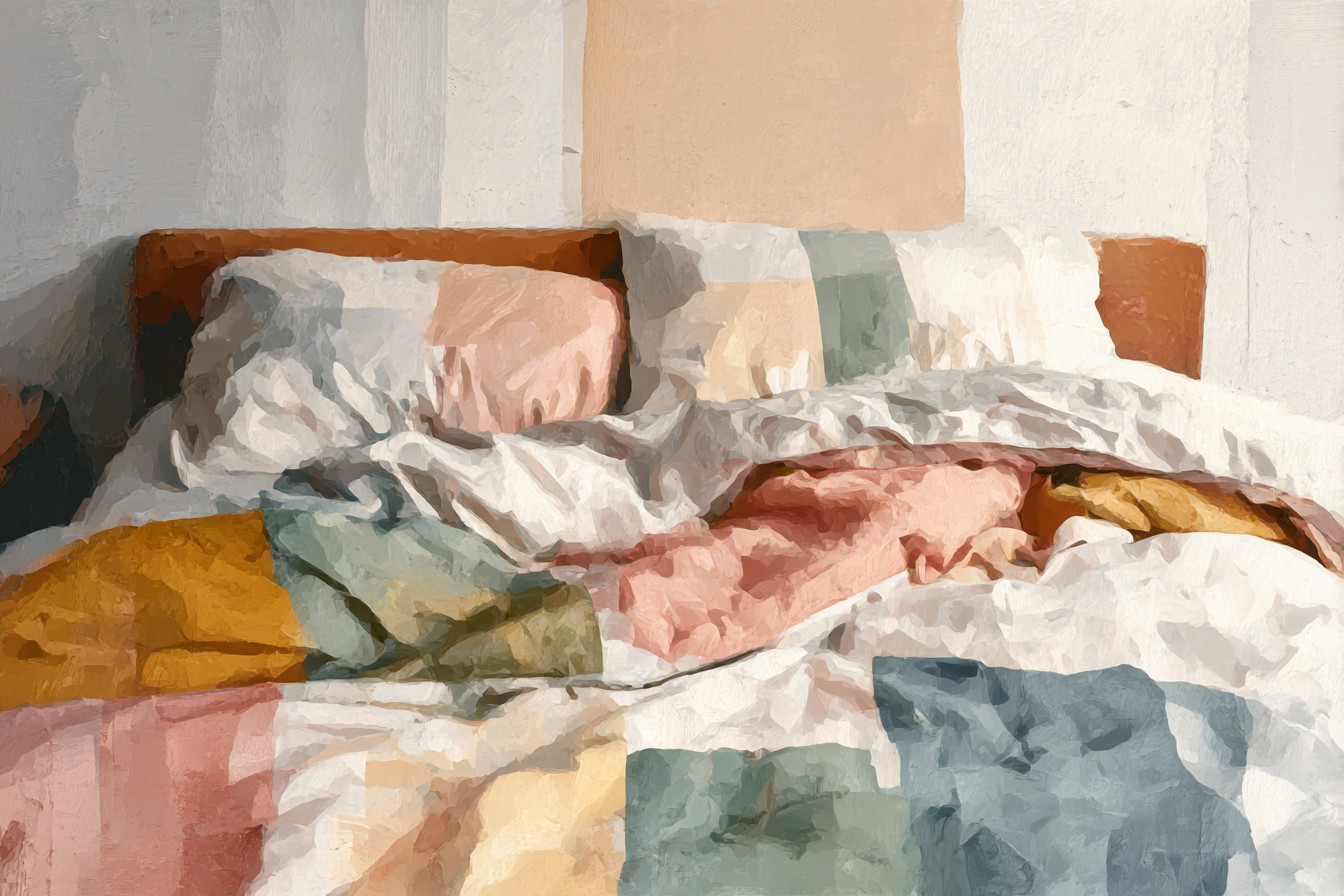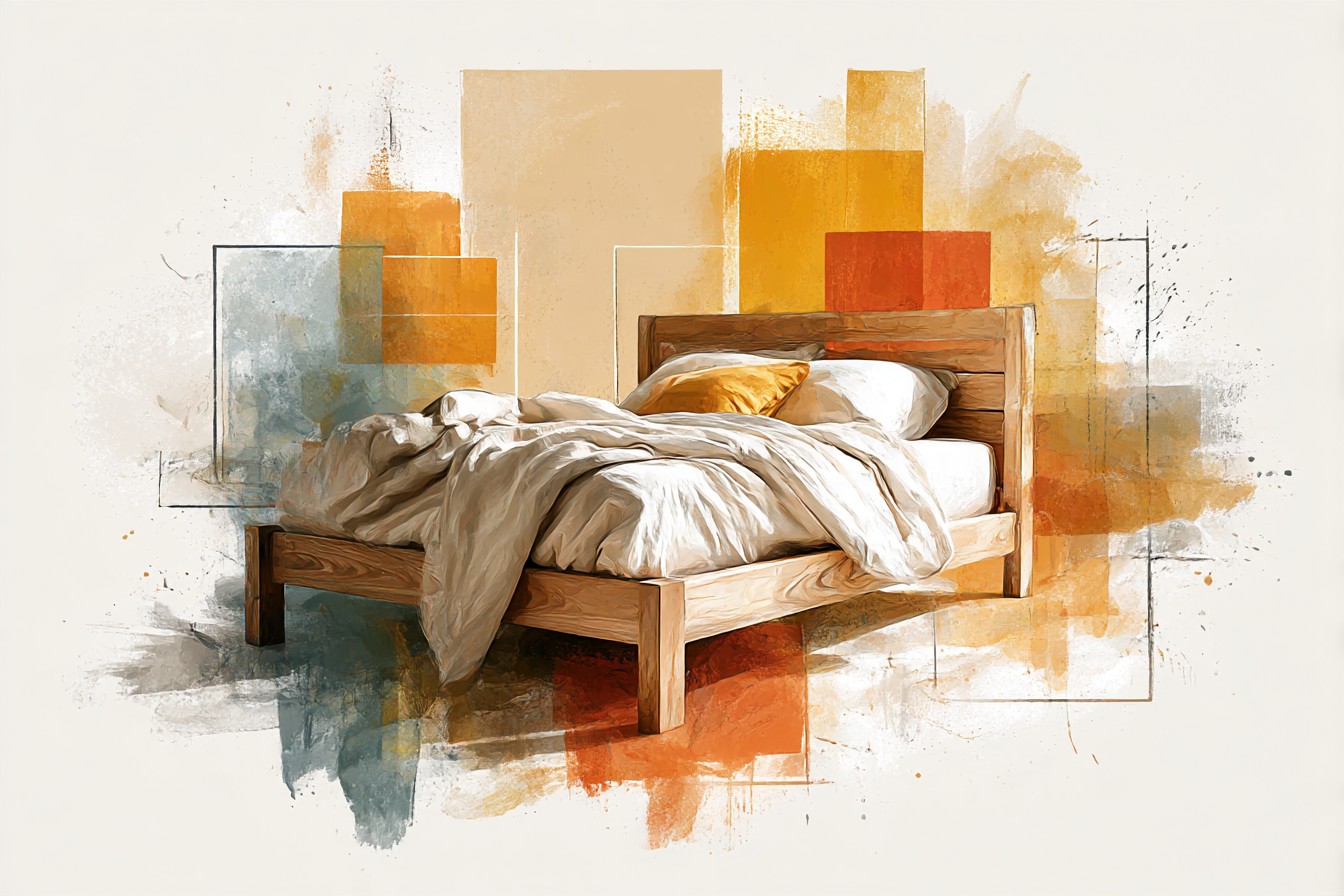
I own four headboards right now, and not one of them is attached to a bed. There’s an iron one, curled at the top like a fern about to unfurl, leaning against the wall of my sunporch since a March estate sale I still think about too fondly. There’s a cane one with three of the original weave squares gone soft and blown out, waiting on a repair I keep promising it. There’s a water stained wood veneer situation I genuinely cannot decide is trash or treasure, and there’s a low painted one from what I’m fairly sure was somebody’s 1962 guest room, judging by the shade of mint. Four headboards. And my actual bed, the one I sleep in every single night, has been sitting there bare against the wall for going on three years.
That’s the part that got me thinking, if I’m honest.

I’ve spent a decade hunting these things down, running my hand along joints in salvage yards to feel for the difference between something built and something merely assembled, and here I am at home with a mattress and box spring shoved right up to a blank wall like a teenager’s first apartment. So one night, half out of curiosity and half out of something closer to guilt, I typed “can you have a bed without a headboard” into my phone like it was a real medical question. Which, for a woman who owns four unattached headboards, it kind of was.
And the answer, once you wade through it, is obviously yes. Of course you can. People have been sleeping without headboards since beds were just platforms and good intentions. But the search results circle around the same handful of worries, that a bed looks unfinished without one, that pillows without something to lean against will slide straight off onto the floor at 2am, that a bare wall behind a bed reads as unstyled rather than intentional. Reasonable worries. I’ve had every single one of them myself, usually around midnight when I’ve woken up to find my pillow has emigrated to the far side of the room.
What I’ve landed on, after actually living with a headboardless bed for three years while simultaneously collecting headboards like a woman running some sort of unlicensed shelter for them, is that bare can be completely fine. It just needs a plan. Not a purchase, necessarily. A plan.
[Bed Headboards]
The Wall Itself as the Headboard
Here’s the thing nobody tells you when you’re worrying about a bare wall behind your bed: the wall is already doing a job, whether you dress it up or not. It’s the backdrop to the one piece of furniture you spend a third of your life in. So the actual fix, most of the time, isn’t buying something to lean against it. It’s treating the wall like it already is the headboard, which it functionally is the second your pillows touch it.
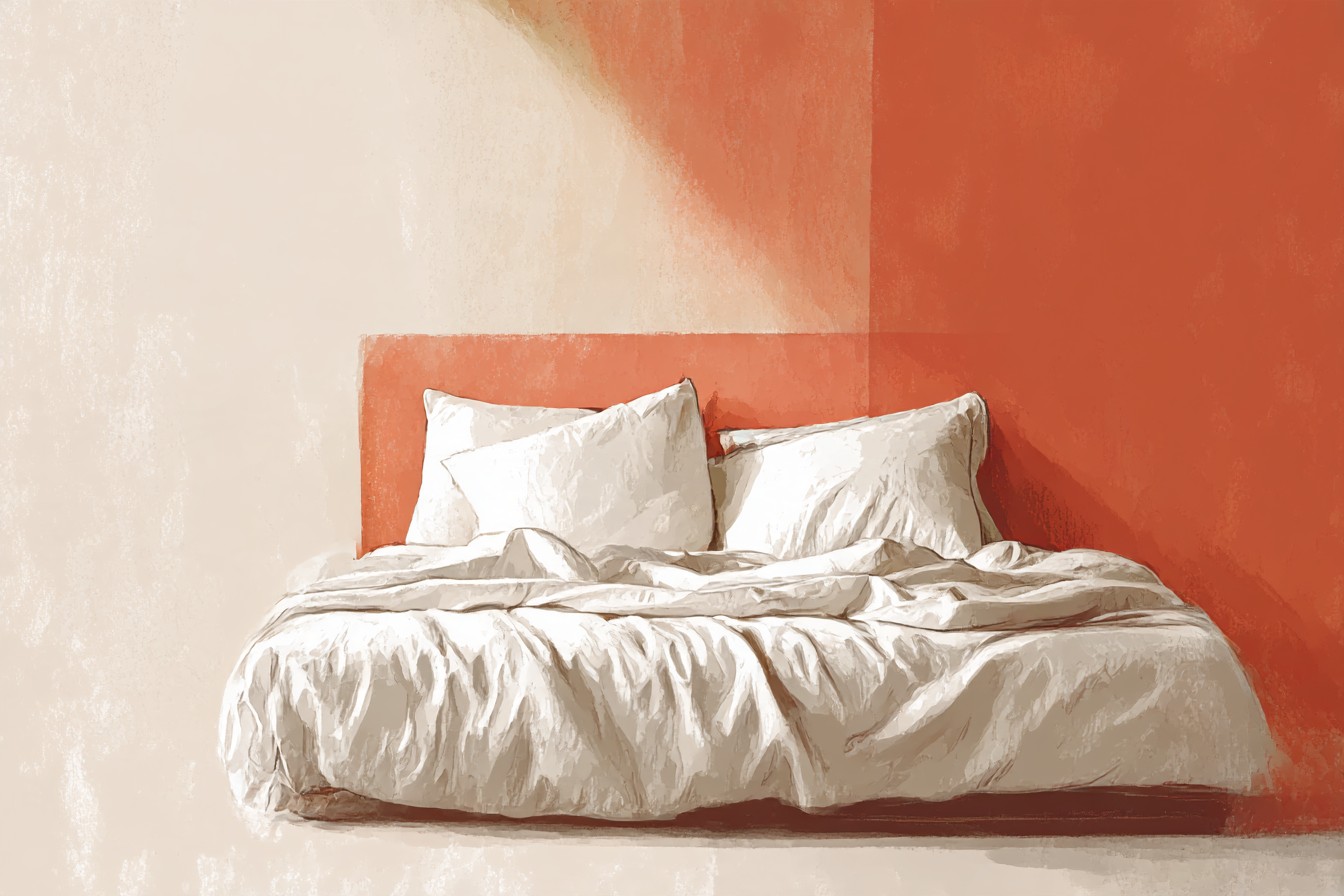
I painted the wall behind my bed a color I can only describe as “wet clay” two winters ago, a deep, slightly pink terracotta that I was nervous about for a full week after it went on, convinced I’d made the kind of decorating decision you have to quietly reverse before anyone visits. I didn’t reverse it. It’s still there, and it does more visual work than any of my four leaning headboards combined, because it gives the eye a clean edge to land on. No headboard needed when the color itself reads as intentional, framed, done on purpose.
Wallpaper does the same job, obviously, and so does a run of picture ledge shelving hung just above pillow height, which I tried in a guest room and liked more than I expected to. Even a single oversized piece of art, hung low enough that the top of your pillows nearly grazes the frame, gives your eye the same stopping point a headboard would. The wall was never really the problem. Leaving it completely untouched was.
[Wall As Headboard]
The Pillow Slide, Solved Without a Headboard
Now, the pillow thing. This is the actual practical complaint, not the aesthetic one, and it’s the one I take seriously because I have woken up more than once with my head practically in the nightstand drawer, having slowly migrated south over the course of a night’s sleep with nothing behind me to stop the drift.
A headboard solves this by accident, honestly. It’s not designed as a pillow wedge, but it functions like one, and when you take it away you do need something doing that job even if it isn’t furniture. My fix, and it took embarrassingly long to arrive at, was a long bolster pillow, the kind that runs the full width of the bed, stuffed firm rather than soft, placed against the wall behind the sleeping pillows rather than on top of them. It creates exactly the barrier a headboard would, just soft instead of solid, and it cost about a tenth of what the cane headboard set me back at that estate sale.
The other trick, and I feel almost silly admitting I didn’t think of it sooner, is just pushing the mattress a couple of inches closer to the wall than feels natural. Most beds sit with a small gap for airflow or because the frame demands it, and that gap is exactly where pillows go to die. Close it up, add the bolster, and the sliding mostly stops. Not entirely. I still find a pillow on the floor some mornings, bless it, but it’s rare enough now that I’ve stopped blaming the lack of headboard for it.
[Pillow Solutions]
You Might Also Like

Leaning, Not Mounted
If you do want an actual headboard shape without committing to a headboard bed, and this is where my whole collection started, you don’t have to mount anything. You can just lean it.
The iron one on my sunporch is destined for this eventually, once I stop being precious about the fern curl catching a scratch. You stand it against the wall behind the bed, let the mattress sit right up against its base, and it does everything a bolted headboard does visually, gives height, gives a frame, gives your eye somewhere to land, without a single screw going into the wall or the bed frame. This matters more than people think if you rent, or if you’re the sort of person who rearranges a room every eighteen months whether it needs it or not, which I absolutely am.
There’s a risk with leaning, and I found it out the hard way with the mint one, which is that if the wall behind it isn’t dead flat, or if you’ve got a baseboard with any real depth to it, the whole thing tips forward at an angle that looks less “styled” and more “about to fall on someone in their sleep.” A small strip of museum putty or a couple of L-brackets screwed into the back of the headboard rather than the wall solves it, keeping the lean but killing the wobble. I learned that one after the mint headboard actually did fall, at 3am, missing my head by what felt like an alarming margin at the time and is probably, in hindsight, several safe inches.
[Leaning Headboards]
Textiles Doing a Headboard’s Job
Somewhere between the bare wall and the actual headboard sits the option I underused for years without really noticing, which is fabric. A quilt hung flat against the wall, a woven wall hanging, even a length of vintage fabric stretched over a simple frame, all of it does the same visual job a headboard does, giving the bed an edge, a boundary, something behind the pillows that isn’t just paint, while adding a softness that iron and cane frankly can’t.
I hung a hand pieced quilt behind my bed for about a year, one with a faded log cabin pattern I’m fairly sure came out of someone’s linen closet decades before it ever reached me, and it did more for the room than the mint headboard ever managed while it was still upright. It also solved the pillow problem a little, oddly, because the extra thickness of fabric against the wall gave the pillows just enough resistance to stop the worst of the sliding, though I wouldn’t rely on a quilt alone to do a bolster’s job.
The only real caution here, and it’s one I ignored the first time, is weight. A heavy textile hung on a single nail will slowly bow the wall or the nail, and you’ll find it drooping at the corners within a few months. Two points of contact, spread properly, keeps it flat and keeps you from redoing the whole thing come spring.
[Textile Headboards]
Letting Nearby Furniture Do the Work
The last piece of this, and the one I think gets skipped over most in the actual worrying about headboards, is that a headboard doesn’t have to be the only thing giving your bed structure. A trunk at the foot, a low bench along one side, even a pair of substantial nightstands flanking the bed at just the right height, all of it frames the bed the way a headboard would, just from a different angle.
I’ve got a blanket chest at the foot of mine now, a genuinely ugly thing when I first found it, dark stained, brass corners gone black, that cleaned up into something I actually like more than most of my headboard collection. It doesn’t touch the wall behind the bed at all.

But it grounds the whole arrangement, gives the eye a second anchor point, and somehow makes the bare wall behind the pillows look like a decision rather than an oversight.
[Furniture Alternatives]
Final Thoughts
So, can you have a bed without a headboard? Obviously. I’ve been doing it for three years while somehow accumulating four of the things I’m apparently too stubborn to attach to anything. The truth I landed on, after all that searching and all that hoarding, is that a headboard was never really the requirement. What a bed actually needs is a plan for the wall behind it, and a plan for the pillows that inevitably try to escape overnight. Solve those two things, with paint or a bolster or a leaning find or a length of quilt, and the headboard becomes optional rather than essential. Mine’s still leaning against a sunporch wall, waiting, not because I need it, but because one day the right bed is going to deserve it. Until then, bare against the wall is doing just fine.