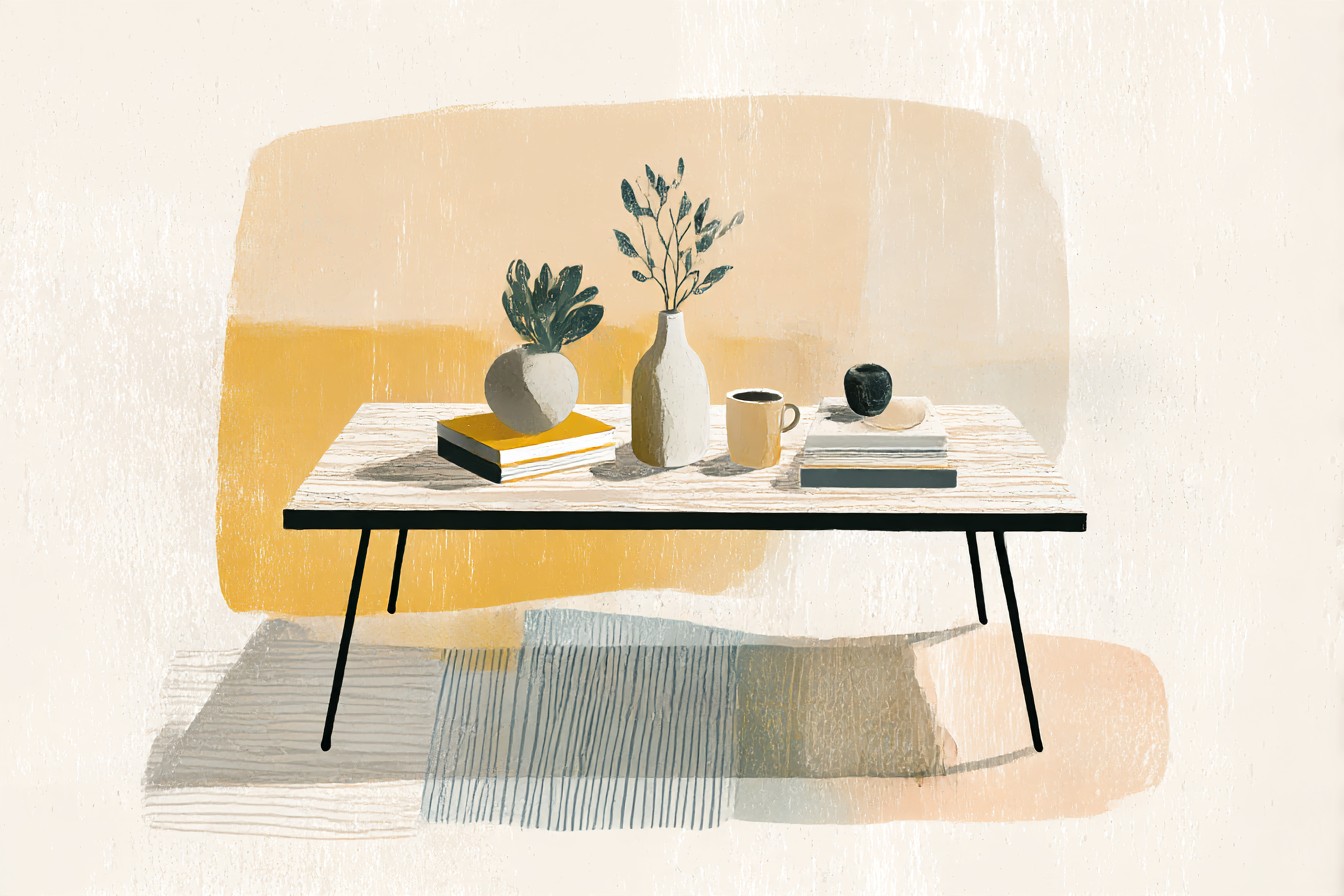
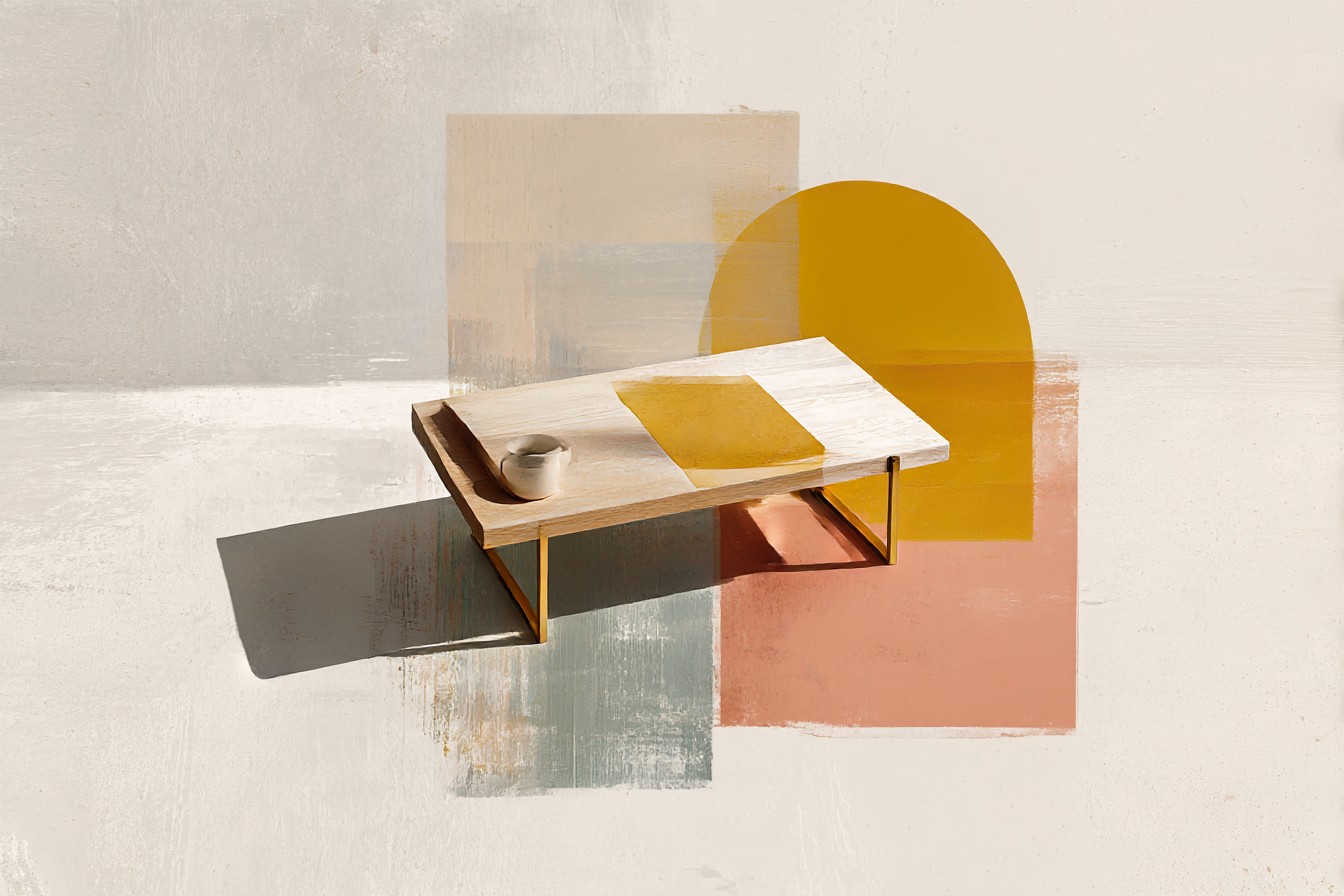
I counted last week, out of morbid curiosity, because I’d just rearranged my coffee table for the third time in four days and needed to know if that was a normal amount of behavior. It’s not. Four times in one week, minimum, and that’s a slow week. I touch that table more than I touch my own phone charger, which is saying something because I lose that thing daily.
Here’s the thing about a coffee table nobody tells you when you move into your first real apartment. It’s not storage. It’s not a shelf that happens to be low.
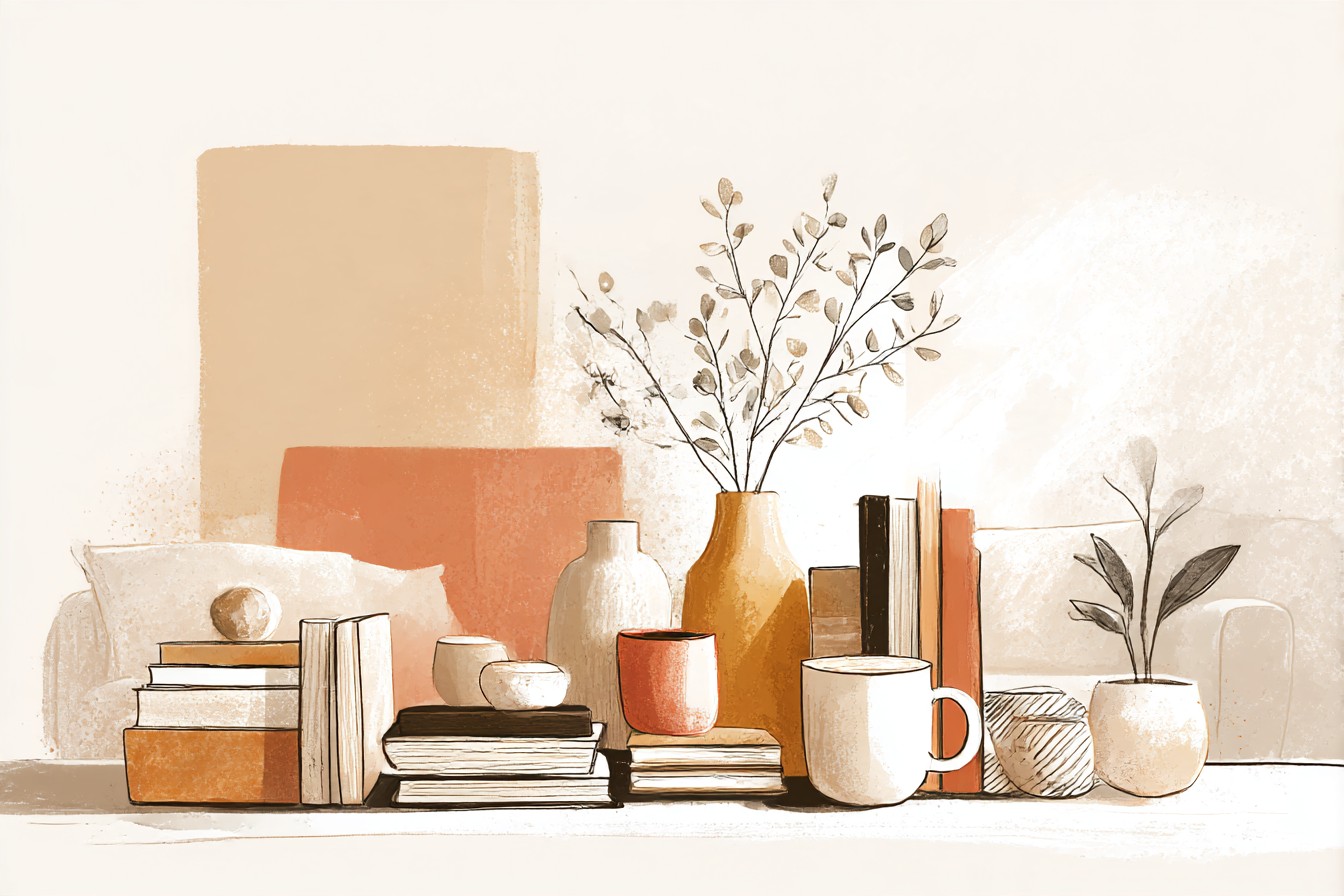
It is, whether you like it or not, the one surface in your entire living room that every single person who visits will look at within the first four seconds of sitting down, before they’ve even taken their coat off, before they’ve said hi properly. Your bookshelf gets a glance. Your coffee table gets studied. It’s basically the opening shot of your whole apartment, and mine spent about a year looking like a landing pad for mail, one hair tie, and a candle I never lit because I was “saving it.”
I fixed that. Not perfectly, not permanently, my coffee table situation is a living document that changes with my mood and whatever my roommate Casey left on it that morning, but I’ve got actual rules now. Rules I broke enough times to know when they’re worth breaking. Odd numbers, mixed heights, all that stuff people say with total confidence like it’s law. It’s not law. It’s a starting point, and about half of what follows is me explaining exactly where the starting point falls apart in a real apartment with real people putting real cups down on it without a coaster, I’ve made peace with that particular betrayal.
So this isn’t a “here’s the aesthetic” post. This is what’s actually survived on my coffee table through two moves, one very determined cat, and approximately nine hundred attempts to make it look effortless when it took me forty five minutes and three group chat check ins to get there.
[Coffee Table Styling]
The Tray, Which Is Doing More Work Than You Think
Okay so the tray thing sounds like the most basic advice in the entire world and I resisted it for way longer than I should have because it felt like something a home staging person would tell you to buy. I was wrong. Genuinely one of the only pieces of advice that fixed my table overnight instead of over a month.
Here’s what a tray actually does. It gives every random object on your table permission to be there together, even if they have nothing in common. My tray currently has a lighter, a coaster I never use because I put it on the tray instead of under the mug, and a little dish with exactly one earring in it that’s been there since March. None of that should work as a grouping. On a bare table it would look like clutter. On a tray it looks intentional, which is the whole trick, the tray is basically a frame that tells your brain “this mess is on purpose.”
I sent a photo of mine to the apartment group chat when I first did it and got “wait that’s so much better, why” from Casey, which, exactly, why is the correct question and I don’t fully have an answer beyond the frame thing.
Rule of thumb, get a tray with a lip, not a flat one, or everything slides when someone bumps the table, and someone always bumps the table. Break the rule if your table’s already small, a tray on a small table just eats the whole surface and then you’ve got a tray on a table instead of a table.
[Trays]
Stacked Books, and the Odd Number Thing Everyone Repeats
Three books. Everyone says three books. Odd numbers, they say, like it’s a spell. And look, three does look better than two, there’s something about two stacked books that reads like you just haven’t unpacked yet. But nobody explains WHY odd works, and once someone explained it to me it stuck. Even numbers split your eye evenly down the middle. Odd numbers force it to land somewhere, usually the middle one, and that’s what makes it feel styled instead of stacked.
Mixed heights matters more than the count though, honestly. I’ve got a giant secondhand coffee table book about Chicago architecture on the bottom, because it’s basically load bearing at this point, then two smaller paperbacks angled slightly on top, and the whole stack reads as intentional even though the top two are just whatever I was reading on the train that week.
Where this rule falls apart, when your books are all the exact same size. I had three matching hardcovers for a while, a set, and stacking them just looked like a filing cabinet. Had to break it up with something round on top, a little dish, anything that isn’t a rectangle, or the whole stack reads flat no matter how odd the number is.
Also, controversial, I don’t think the books need to be books you’ve read. Mine are half aesthetic, half actual reading pile, and nobody’s ever called me out on it, they just want to know where I got the Chicago one.
[Books]
One Living Thing, and Why I Killed Three Before I Learned This
I want to be honest about my track record here because it’s not good. I killed three plants before I figured out the actual rule, which is that your coffee table needs ONE living thing on it and it needs to be something you will not forget exists. Not a fern that needs attention twice a week, something closer to a low maintenance situation, a single stem in a bud vase, or honestly a small succulent that survives on neglect because that’s basically my love language with plants at this point.
You Might Also Like

The reason it matters isn’t decorative, not really, it’s that everything else on a coffee table is dead material. Books, trays, candles, ceramics, all static. One living thing, even a small one, changes the whole energy of the surface because it’s the only thing that moves, that changes day to day, that isn’t fixed forever in the same position.
My current one is a single eucalyptus stem in a thrifted glass bottle that used to hold something entirely unrelated, I genuinely don’t remember what. It’s been there two months and it’s basically forgotten it’s supposed to be alive, which for me is a personal record.
Rule to break, if you actually kill everything, fresh flowers from the grocery store every week or two do the same emotional job and you’re not committing to keeping anything alive, you’re committing to throwing it out eventually, which honestly I find less stressful.
[Greenery]
The One Weird Object, Which Is Not Optional
Every coffee table needs one thing that makes a guest go “wait what is that” and that’s not a design rule, that’s just true, I’ve watched it happen enough times to trust it. Mine’s a small ceramic hand, fingers slightly curled, that I bought at a stoop sale for four dollars from a guy who insisted it used to belong to an artist. No idea if that’s true. Doesn’t matter.
The point of the weird object is that it’s the one thing on the table that isn’t performing a function. The tray organizes, the books stack, the candle scents the room. The weird object just sits there being itself, and that’s exactly why people notice it first even though it’s usually the smallest thing on the surface.
I’ve tried skipping it, going full minimal, tray and books and nothing else, and it always ends up looking like a hotel lobby. Fine, tasteful, completely forgettable. The weird object is what makes it feel like a person lives there and not a rental listing photo, which, given that I am in fact renting, matters more to me than it probably should.
Doesn’t need to cost anything either. Casey’s is a rock from a lake trip that got weirdly smooth and she refuses to explain further. That’s the whole vibe, an object that comes with a story you either get told or don’t.
[Personal Objects]
Candles and Texture, the Part I Actually Get Wrong Constantly
Update, since apparently I have to be honest about this. I bought a big matte black candle a few months back because it looked incredible on camera, filmed the whole unboxing, posted it, got a lot of nice comments. Real life verdict, three weeks later, wax residue on the tray I just talked about loving, and the candle itself already looking dusty because matte finishes show every bit of dust like it’s personally offended by it. Sorry to anyone who bought one because of that video.
What actually works long term, texture that isn’t precious. A small ceramic dish that can take a hot mug without me panicking. A candle I’m actually willing to burn instead of one I’m “saving,” because an unlit candle on a coffee table is just a decorative brick, it’s not doing its job.
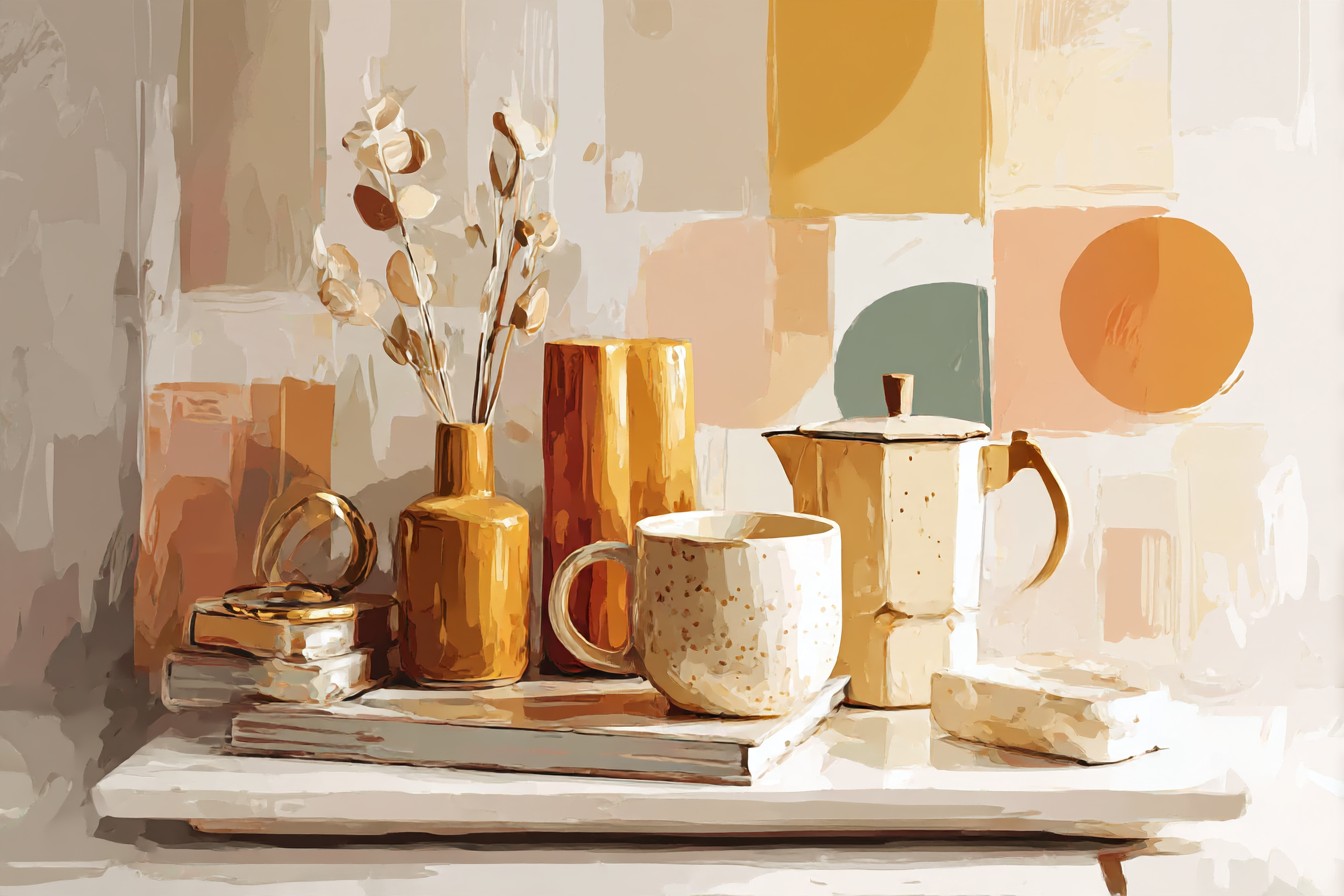
Glossy or textured stoneware over matte, purely because matte shows fingerprints and dust like it’s keeping score.
Mixed materials matter here too, wood tray, ceramic dish, glass vase, maybe a metal object like a small dish or lighter. If everything’s the same material the table goes flat fast, no matter how nice each individual piece is on its own.
[Texture Pieces]
Final Thoughts
None of this is actually about the coffee table, not really. It’s about the fact that this one surface ends up holding whatever’s true about how you live that week, the book you’re pretending you’ll finish, the object with the story nobody asked for, the candle you’re finally willing to burn instead of save for a version of your life that’s more put together than this one. Odd numbers and mixed heights get you organized. They don’t get you honest, and honest is what actually reads as styled instead of staged.
I still rearrange it four times a week. Some weeks it’s genuinely close to right, tray anchored, stack leaning slightly, one small living thing doing its quiet thing in the corner. Other weeks it’s a mess of mail and one hair tie again, and I’ve stopped treating that as a failure. It’s just the table doing its actual job, which was never to look perfect, it was to look like somebody’s actually there.